Big test: Blackmagic Design Pyxis 12K
Posted on Jan 2, 2026 by Pro Moviemaker
The second model in Blackmagic’s affordable cinema camera series is the welcome leader of a resolution revolution
Words Adam Duckworth
Blackmagic loves to disrupt the industry with its camera range that brings high-resolution, cinema-style equipment to the masses. While they do have their quirks, it’s impossible to get anything close to this for such a good price.
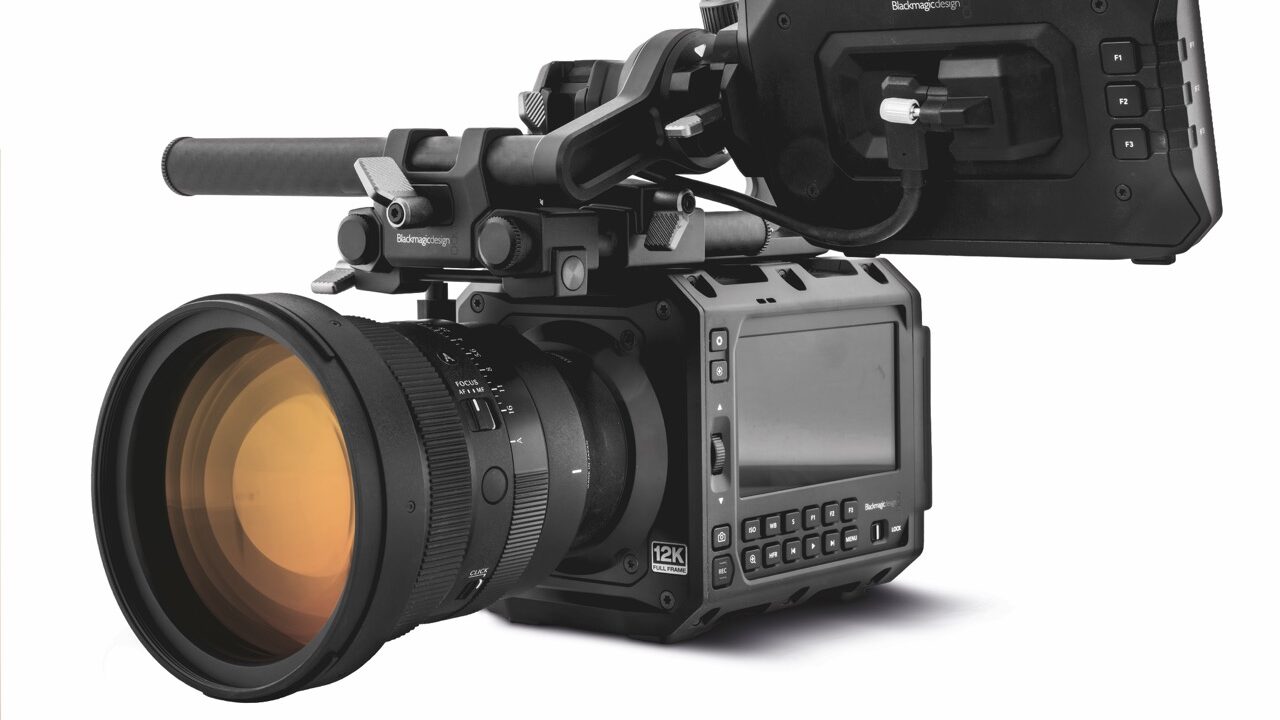
Take the latest in the Pyxis family, the 12K version, for example. It has the high-value £2295/$3295 body of its predecessor, the Pyxis 6K, but essentially with the 12K sensor from the £6359/$7695 Ursa Cine camera body fitted. And it’s priced in the middle of both, at a stunning £4320/$5495. That’s not even the price of top-end mirrorless cameras, and is way less than any cine cam with a vaguely close spec. Canon’s 6K EOS C400 is £7799/$8799, Sony’s 4K PXW-FX9 is £10,499/$6400 and even Red’s 6K Super 35 Komodo-X is £7299/$6995. Plus the Pyxis comes with a full copy of DaVinci Resolve Studio, which is usually £289/$295.
The Pyxis 6K was the Aussie brand’s first compact, cinema-style modular camera to offer a full-frame sensor, followed by the 12K and 16K versions in the full-frame Ursa range, which are much bigger and heavier.
Sensor and resolution
Now the sensor from the 12K Ursa is in the Pyxis body, you might think it would achieve the handling of the lighter 6K Pyxis with the performance of the 12K Ursa. It’s not that simple. The Ursa has a more pro-orientated processing pipeline that uses more power to retain some key advantages and could make it worth the extra investment.
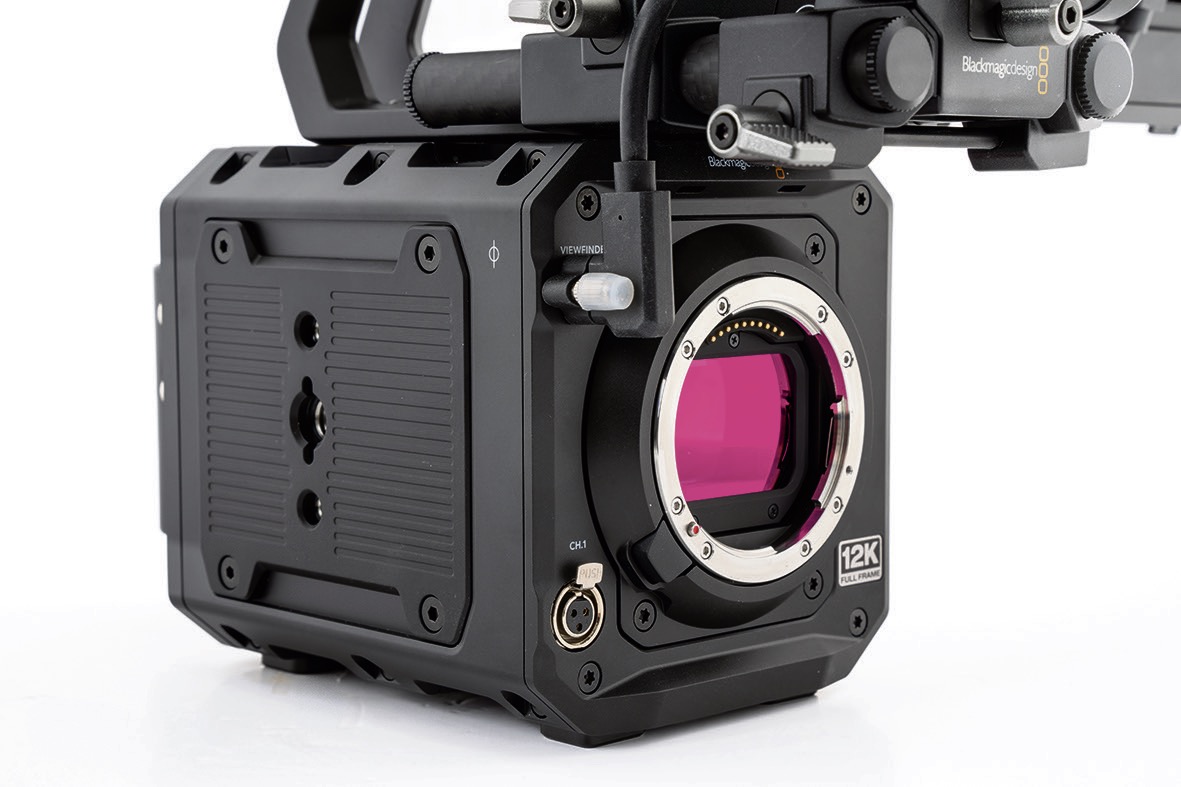
Both of the 12K cams use Blackmagic’s full-frame 36x24mm RGBW sensor with a native resolution of 12,288×8040 pixels. But where the Ursa Cine can shoot 12K at up to 120fps with no sensor crop or up to 80fps in open gate, the Pyxis version tops out at half those speeds for the same resolution. This is true across the range of resolution versus frame rate options. 8K or 4K open gate is maximum 72fps on the Pyxis, while it hits 144fps on the Ursa.
Processing speed
The processing speed also affects rolling shutter artefacts. The Pyxis gives noticeably more skewed verticals than the Ursa Cine at the same settings when doing fast pans. Armed with this knowledge, you can work out which resolutions avoid issues. Lower resolution gives a better rolling shutter performance, for instance. It is far from the truth that the Pyxis 12K does not perform well, though. It’s just not as fast or ideal for fast-moving action as the burly Ursa.
Video and image quality
In terms of 12K shooting, open gate is up to 40fps, 16:9 is 45fps and 2.4:1 for anamorphic is 60fps. Go to 9K and there’s a Super 35 crop to get 50fps in 3:2 open gate, with 65fps in 16:9.
In 8K or 4K, 3:2 open gate reaches 72fps, 16:9 is 84fps and 2.4:1 gets up to a speedy 112fps. This is very useful for the vast majority of cinema work.
Despite the crops, the image quality is stunning thanks to both the resolution and Blackmagic’s custom RGBW design, which delivers high dynamic range, clean colours and great low-light performance with clean shadows and good tonality, even at ISO 1600. The native ISO is rated at 800 to give an incredible 16 stops of dynamic range. The 125-3200 ISO range is limited, but shows that the camera likes lots of light.
Don’t forget this small camera is chewing through 12K footage that is ten times the resolution of 4K. The sensor supports full downsampling in camera to 8K and 4K, maintaining the look even when you don’t need it, which is most users, most of the time.
Quality wise, our tests show it’s better to record in 12K and downscale in post, but 12K affects the available frame rates and rolling shutter performance. So, you might want to compromise on the ultimate image quality to downscale in camera to 4K to get faster frame rates, for example. This might sound like a downside but, if you need 12K for either cropping or VFX work, you have it. Even if you want faster frame rates, which call for a sensor crop, the detail will be incredible. You can shoot interviews on a wide lens and punch in for close-ups on two or three speakers without sacrificing image quality.
Like the Ursa Cine, the Pyxis series uses Blackmagic’s Generation 5 colour science, for both natural and pleasing skin tones. Colour roll-off is exceptional, especially in highlights and, in Resolve, the camera couples beautifully with the workflow, for both accurate on-set monitoring and a smooth grading experience in post. As the sensor has a built-in optical low-pass filter, moiré is not an issue.


Blackmagic Raw
The Pyxis sticks to its highly efficient Blackmagic Raw (BRAW) codec that enables high-resolution capture at manageable bit rates. With multiple compression options from Q0 to 18:1, it offers flexibility for high-end finishing as well as proxy workflows.
Colour and ISO adjustments can be made non-destructively in post, using DaVinci Resolve. There are no non-Raw camera formats like ProRes or 4:2:2 10-bit for quicker workflows. All you get is Raw, plus HD proxies for editing and a cloud-based workflow for when things are needed in a rush. It’s a shame that there’s no edit-ready format on board. Workflow will be a consideration, as file sizes in 12K are massive, even with BRAW compression. You’ll need solid storage and a fast computer.
Accessories and settings
The camera records onto two CFexpress Type B card slots or onto an external SSD. If you spend time in post converting the Raw files, you’re rewarded with footage that is detailed, colour-rich and flexible. You can make huge colour balance alterations and push any grade you like and the results will be incredible.
There are lots of gamma settings to choose from when shooting, such as Video for a punchy look, Extended Video for a wider dynamic range and Film for a cinematic feel. LUTs are included or you can load your own.
Resolve also offers digital image stabilisation, although there is a small crop. As a real cinema camera made for tripods or gimbals, there is no inbuilt image stabilisation system.
Design and build
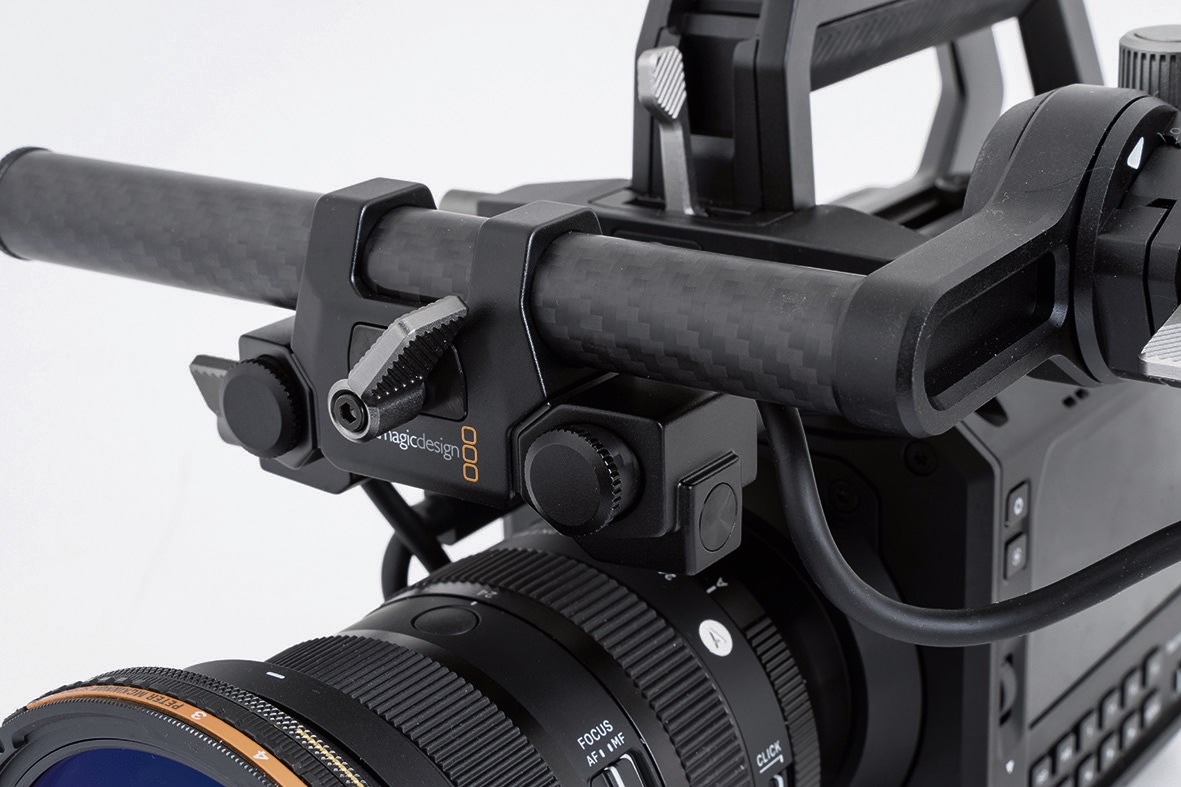
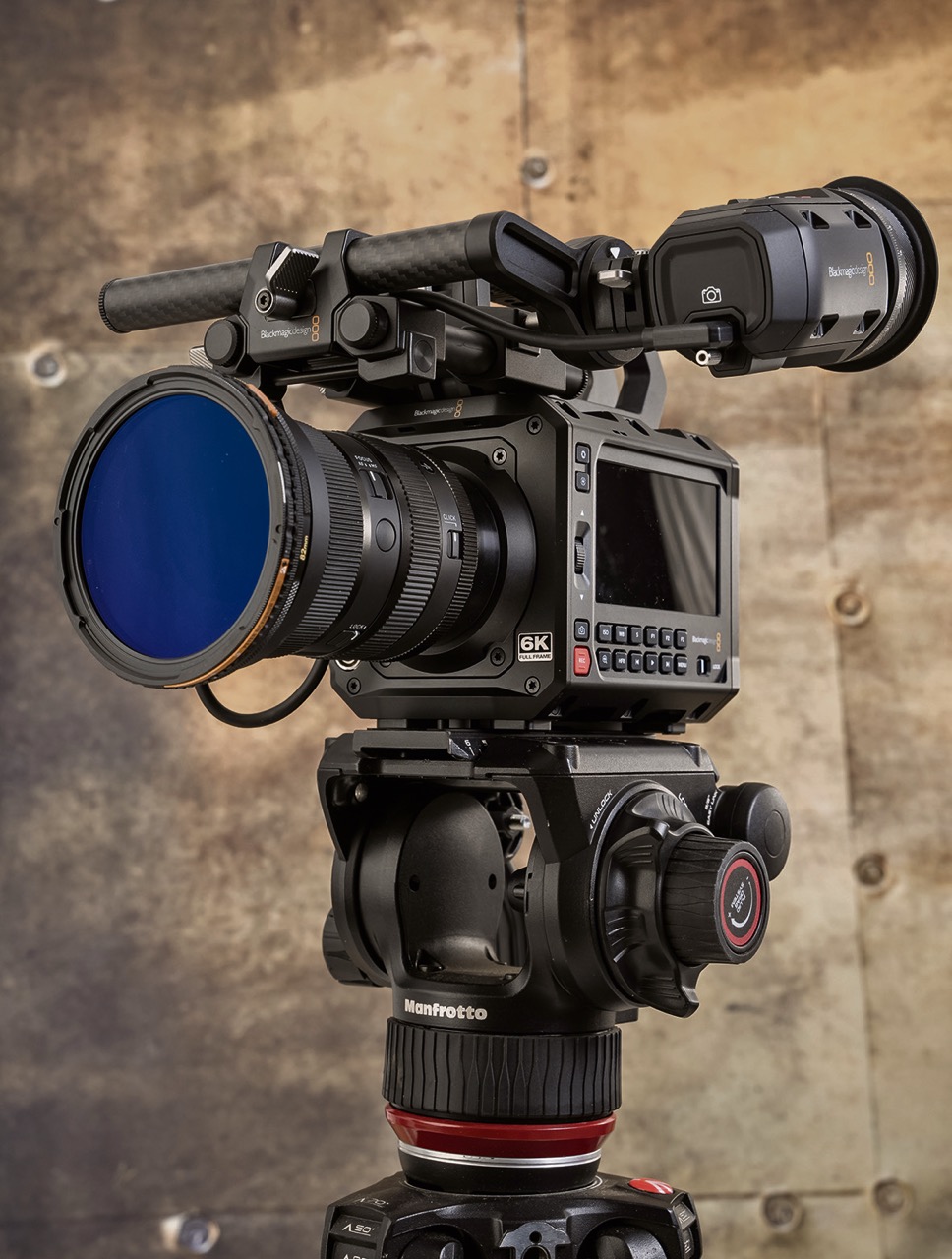
In terms of the body, the Pyxis we tried had a Leica L-Mount, as used in Panasonic, Sigma and Leica cameras, but it is also available with either a PL mount or a locking EF mount. The mounts are not interchangeable, so if you use PL or EF lenses your choice is obvious. However, if you get the L-Mount version, then you can buy adapters to use PL or EF glass. Some offer features like built-in ND filters. The Pyxis does not have these built in, so you have to use a matte box with filters or a variable ND to make sure you get the exposure right.
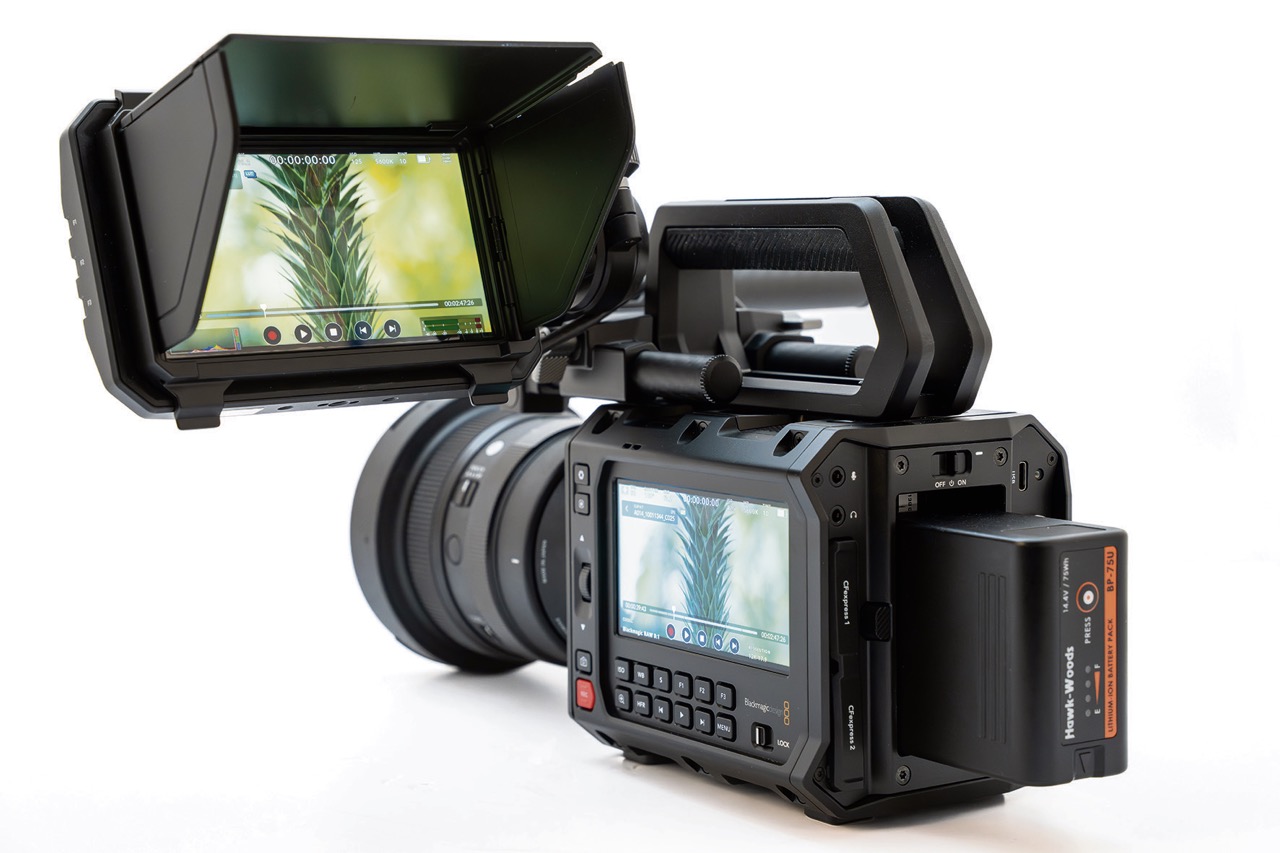
There is a four-inch, 1500-nit HDR touchscreen on the camera’s left side used to change settings and navigate menus. It has clear menus and useful tools like false colour and zebras.
There’s an array of buttons that change much-used features such as ISO and white-balance, plus quick autoexposure and autofocus buttons that use the slow contrast detection AF system in single-shot mode.
The Blackmagic focuses quickly, but sometimes has to hunt before locking on. There’s no continuous AF, so it’s not ideal for fast-moving subjects. With a large screen, useful peaking and a punch-in focus button which zooms in on the central area, manual focusing is where it’s at.
Extras, extras!
One essential is the five-inch, external monitor to sit on top or to the side. It is just £294/$325 or £443/$495 for a kit with a mount, cables and accessories. Additionally, for £634/$715, you can get a rig with carbon-fibre accessory rods included.
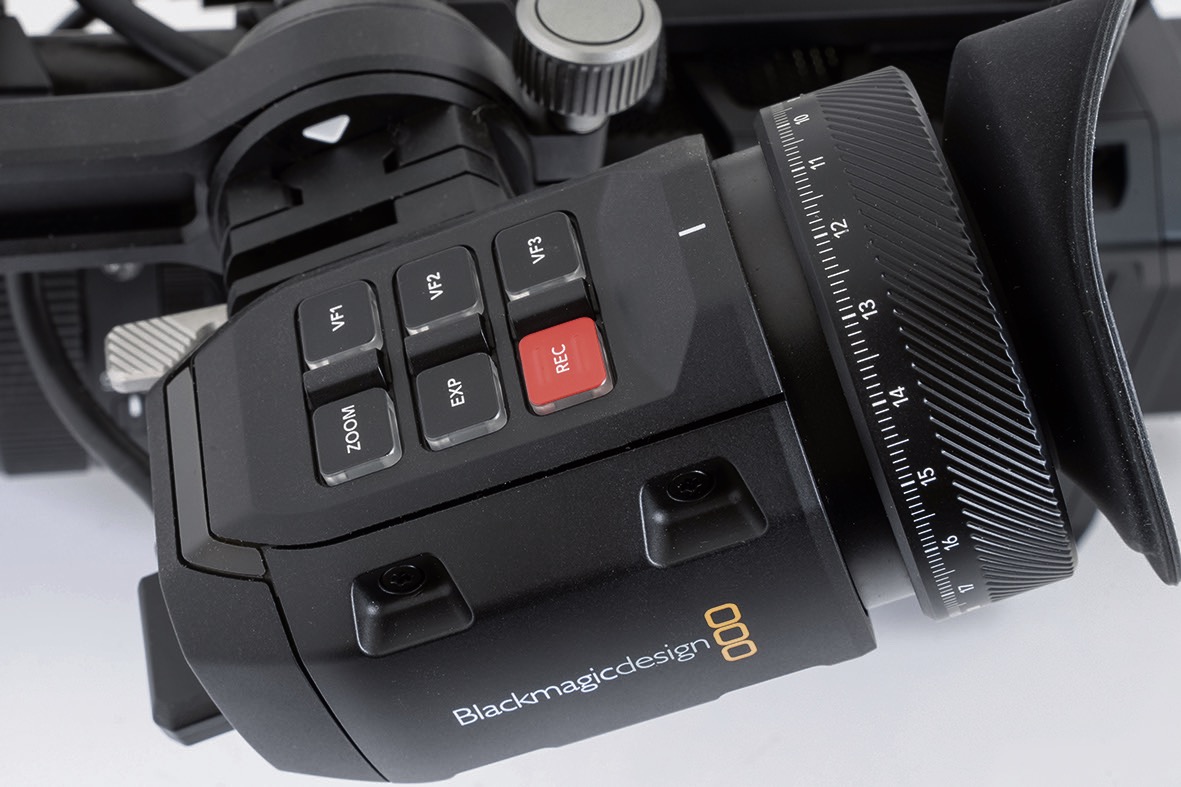
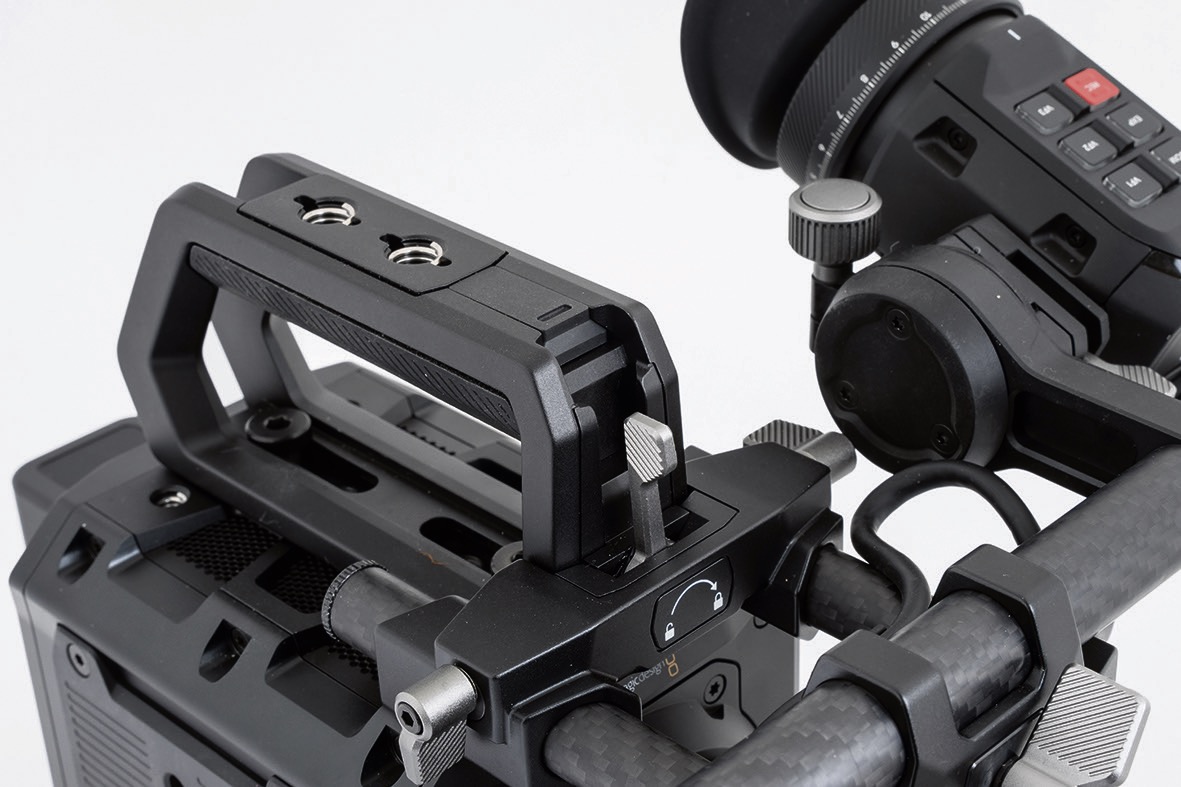
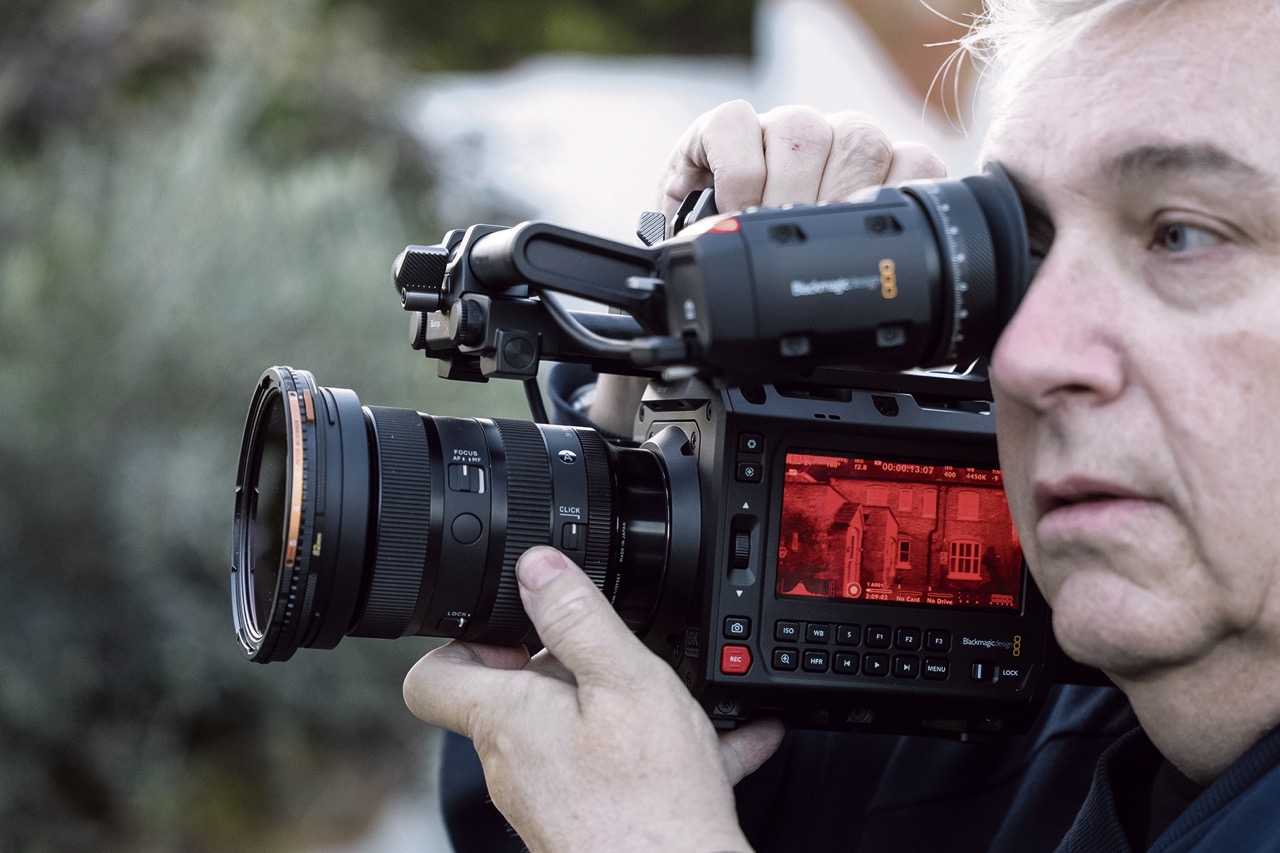
For shoulder-mounted work, you need an EVF like the Ursa kit which is £1674/$1865 and transforms it into a genuinely useful camera, although it needs a right-hand grip handle. You can use a USB-C output to power and send the video signal to the external monitor. There’s no HDMI one, so for many external monitors you’ll need a USB-C to HDMI adapter, but the dual USB-C outputs mean you can use an EVF and a monitor at the same time.
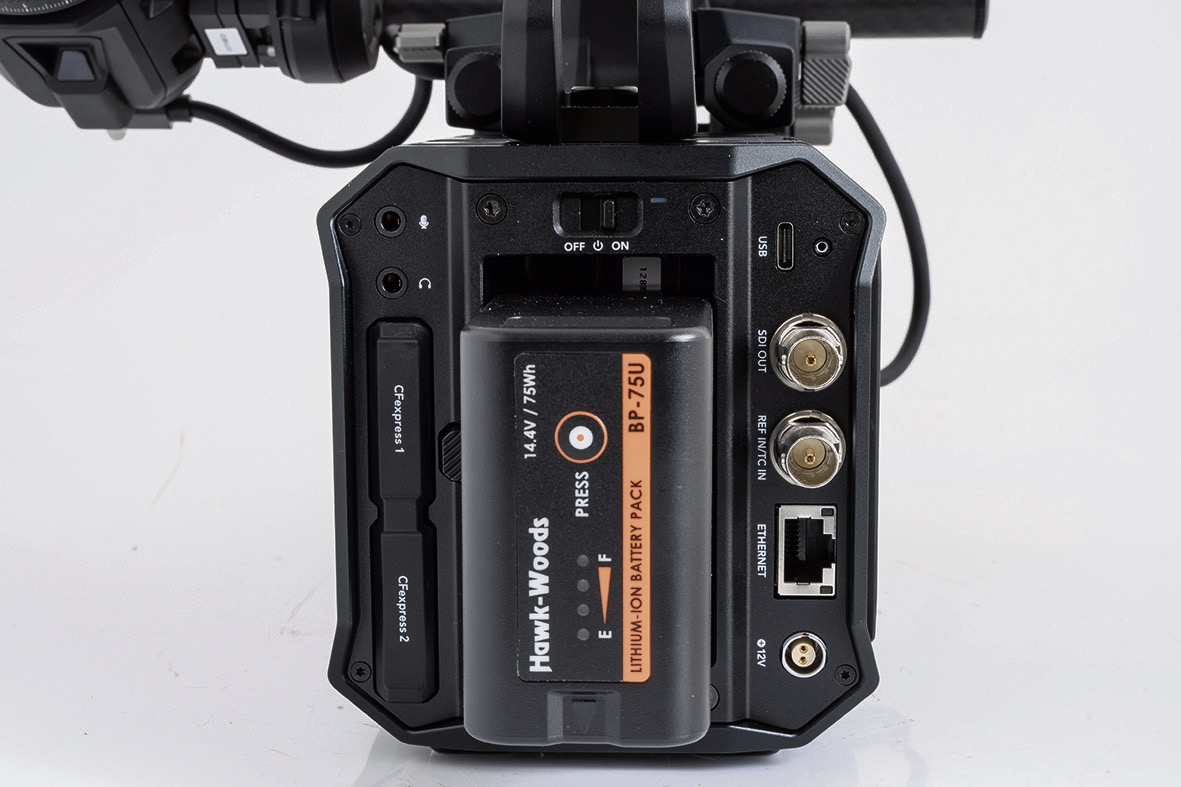
The camera is packed with different connectivity options. You can use Blackmagic’s cloud service, stream to YouTube or Facebook, plug in an Ethernet cable or even attach a webcam via USB-C.
For audio, there is a mini-XLR input with phantom power, decent internal mics and preamps. You need an adapter to use full-size XLR mics.
Although the camera comes with a battery slot for the popular Sony BP-U fit cells that offer D-Tap output to power accessories, you can rig up a V-Mount battery.
The Blackmagic product is very much a modular cinema camera: you need accessories with it, which adds to the overall cost and bulk. Even so, you get a fully customised, full-frame cinema camera that shoots 12K Raw for a very reasonable amount.
Which Pyxis is right for you?
Pyxis 6K:
- 6K maximum resolution
- 120fps frame rates in HD
- Better rolling shutter performance
- Cheaper
- Full-frame look without massive, data-heavy files
Pyxis 12K:
- 12K maximum resolution
- Best for reframing and VFX
- Highest image quality overall
- More dynamic range
- Dual USB-C outputs
Choose Pyxis 6K for events, docs, handheld, fast-moving subjects
Choose Pyxis 12K for cinema, music videos, ads, green screen, beauty work
Specifications
- Price: £4320/$5495
- Sensor: 36x24mm RGBW full-frame CMOS, 98.8 megapixels, 12,288×8040 pixels
- Image stabiliser: None
- Base ISO setting: 800
- Dynamic range: 16 stops
- Lens mount: Leica L (Canon EF, PL optional)
- Monitor: 4in HDR LCD touchscreen
- Viewfinder: Optional
- Autofocus: Contrast detection, single shot only
- Recording format: Blackmagic Raw 12-bit 12K up to 60fps, 9K to 80fps, 8K and 4K to 112fps
- External recording: Via SDI/BNC to 4K. H.264 proxy
- Connectivity: 2x USB-C, BNC 12G-SDI, mini XLR, 3.5mm stereo mic input, Lemo 2-pin DC input, BNC, RJ-45 10Gbps Ethernet, Bluetooth
- IP streaming: Yes, via USB-C
- Storage: 2x CFexpress Type B
- Battery: Sony BP-U
- Dimensions (wxhxd): 106x119x151mm/ 4.17×4.69×5.94in
- Weight: 1600g/3.5lb EF mount

The verdict
Both of Blackmagic’s new Pyxis models are very affordable full-frame cinema cameras that offer incredibly detailed, filmic footage from Raw files. But if you want the highest resolution, the 12K version is a better buy for not too much more money.
However, you have to factor in the cost of accessories, ND filters, audio and rigging to make it into a usable camera, which adds to the cost and bulk of the kit.
It is a stunning camera, but it doesn’t have internal ND filters, any image stabilisation or a continuous AF system and you have to shoot in Blackmagic Raw files.
It’s not a fast-action, run-and-gun machine for everyday documentary and event shooting that requires fast turnaround. It’s a super-detailed cinema camera that’s ideal for well-planned shoots with great light.
When matched with an editor who can get the best out of the files in Resolve, it is capable of results nothing can match at anywhere near this level of affordability.
How it rates
Features: 8
Internal Raw but still no ProRes, IS, ND or continuous AF
Performance: 9
Raw files are amazing, especially in 12K
Handling: 8
Needs lots of accessories to make it work
Value for money: 10
Low price for a 12K Raw, full-frame sensor cinema camera
Overall rating: 9/10
A full-frame 12K Raw camera at mirrorless money
- Pros: 12K Raw, real cinema cam, value for money
- Cons: Poor AF, Raw shooting only
This review was first published in the January/February 2026 issue of Pro Moviemaker