Big test: Canon R6 III vs C50 lens choice
Posted on Mar 25, 2026 by Pro Moviemaker
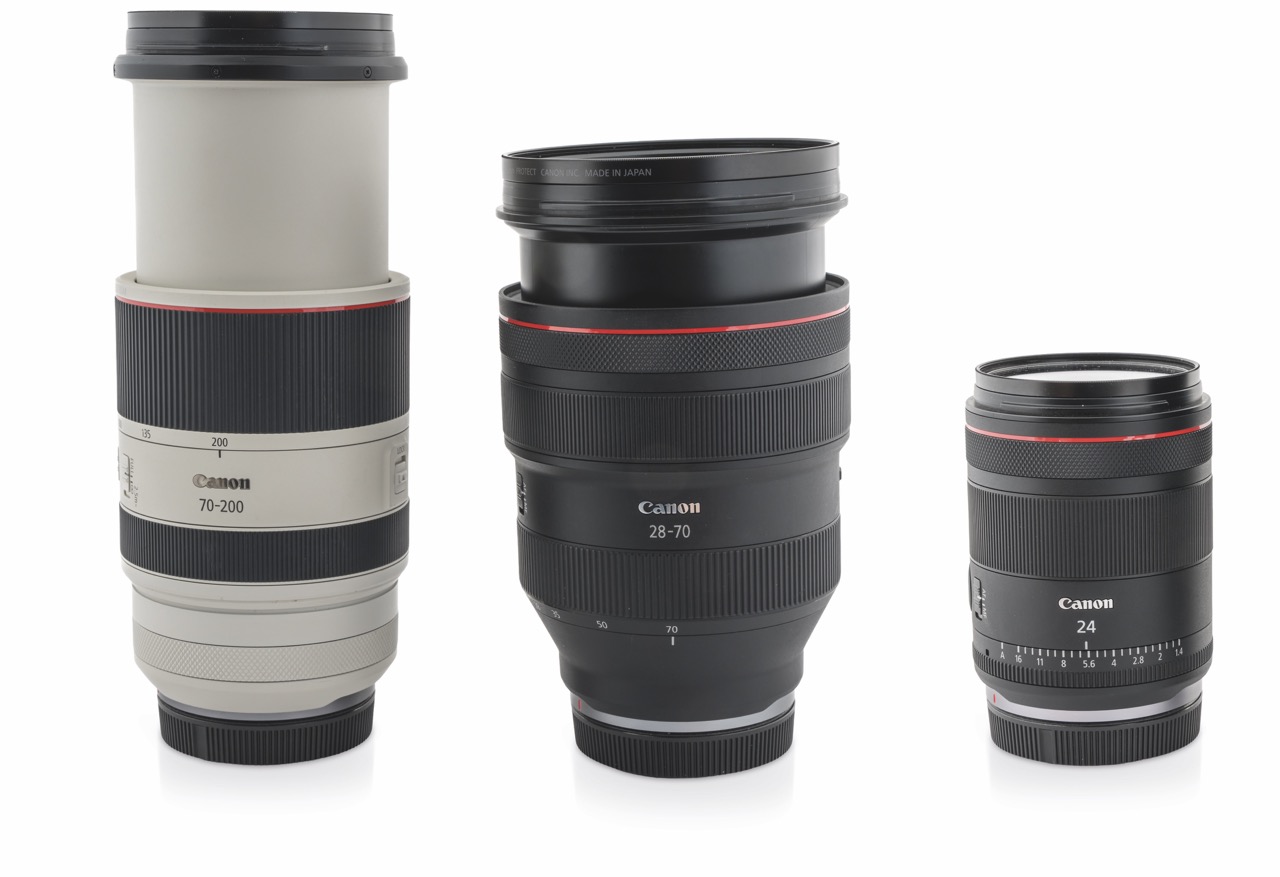
We build a stunning three-lens set to maximise the potential of Canon’s EOS R6 Mark III and EOS C50
Choosing a set of three lenses to perfectly suit the performance of these new Canon cameras is not an easy task, despite an increasing number to choose from. The RF mount has been around for just over seven years but is still one of the most closed systems, as it does not allow indie brands to make RF-fit AF lenses for full-frame sensors. But there are still lots of options.
Users of EF mount lenses can buy adapters that not only make the optics fit, but also offer communication with the body and take advantage of image stabilisation, autofocus, vignetting and aberration. Basic EF-to-RF mount adapters cost around £100/$100, but if you spend more you can get more functionality. There are locking mounts, speed boosters, tilt-shift converters, mounts with separate control rings to mimic native RF glass and mounts that accept drop-in variable ND filters or a polariser. This can be a wise buy because neither camera comes with built-in ND filters. If you use PL cine glass, an adapter lets you fit a huge range of lenses going back decades.
On the other hand, if you want to take the plunge into RF lenses, Canon’s own range is the only option. One advantage of the large RF mount is that it allows Canon to offer lenses that are unique and, often, very fast compared to rival optics. However, the more exotic Canon RF lenses have obviously been primarily designed as stills-first options and so can be heavy and expensive.
The speedy standard
One such lens is a unique standard zoom that takes advantage of the large mount. It’s the beefy Canon RF 28-70mm f/2 L USM, which is one of the most ambitious standard zooms ever made and marries exceptional optical quality with useful flexibility. Covering a classic focal range from wide angle to short telephoto and combined with a constant f/2 aperture, it encourages creativity in both stills and video – especially in low light or when shallow depth-of-field is desired.
But it costs £3400/$3399 and weighs 1430g/3.15lb. So it’s a real beast with a 95mm front filter thread, and is 104mm/4.09in in girth.
With 19 elements in 13 groups and nine rounded aperture blades, it’s optically excellent, and that incredibly fast maximum aperture lets you use it like a 28, 35, 45, 50 or 70mm prime. Yet it’s certainly lighter and cheaper than hauling a lot of primes around.
The RF 28-70mm f/2 L USM incorporates a configurable control ring for intuitively adjusting certain exposure settings from the lens itself, namely ISO, aperture and exposure compensation. Optically, this lens delivers remarkable sharpness across the frame, even wide open at f/2. Chromatic aberration and distortion are tightly controlled, and rendering is characteristically Canon: clean with natural colours and pleasing contrast straight from camera. Flare resistance is strong, helping maintain micro-contrast in bright conditions.
Autofocus is fast, quiet and very dependable thanks to Canon’s USM drive, making it suitable for run-and-gun work as well as more deliberate portrait sessions. Bokeh is smooth and creamy at f/2, lending a prime-like look despite the zoom convenience.
A lens that can pretty much do it all, the 28-70mm f/2 is an optical star that rewards those prepared to shoulder its weight.
Go-to pro telezoom
So many shooters need a fast telephoto zoom and Canon’s RF 70-200mm f/2.8 L IS USM is often an essential buy for hybrid workers, filmmakers and photographers alike. Useful for so many subjects, it is a quintessential professional workhorse that delivers class-leading image quality, reliable performance and flexibility for low-light and fast-action scenarios.
At its core, the lens pairs a versatile 70-200mm range with a constant f/2.8 aperture, ideal for everything from portraiture and event coverage to wildlife, sports and cinematic B roll. The wide aperture produces excellent subject separation as well as smooth background rendition that helps to isolate talent or details in both stills and video work.
Optically, the RF builds on Canon’s long legacy of 70-200mm glass with impressive sharpness throughout the frame, strong contrast and excellent control of chromatic aberration and distortion. Even when used wide open at f/2.8, images and footage exhibit high micro-contrast and crisp detail – characteristics that give a prime-like performance across the zoom range.
Autofocus performance stands out. The USM (Ultrasonic Motor) drive is both fast and whisper-quiet, locking onto subjects quickly and tracking them reliably – especially useful for run-and-gun shooting or capturing unpredictable movement. Its optical Image Stabilisation (IS) system further enhances usability for steady handheld results even in lower light or at longer focal lengths.
Handling is solid with robust build quality, weather sealing and a damped zoom/focus action that make the lens feel at home on gimbals, tripods or handheld rigs. The constant physical length and inner focusing design also keep balance predictable as you zoom.
There are compromises, however, as at full extension it’s a substantial piece of glass, and filmmakers should mind its weight on long shoots. But if you want a single long lens that doesn’t compromise optical quality or performance, the £3059/$2799 RF 70-200mm f/2.8 L IS USM remains a cornerstone of any professional’s kit.

Wide-open possibilities
The RF 24mm f/1.4 L VCM from Canon’s new range of hybrid primes is an essential fit in our three-optic set, as it gives a wider field of view than the standard zoom and a much wider aperture for shallow depth-of-field effects. It is also much smaller and lighter, so works better on a rigged-up camera or when used on a gimbal. It marks a new direction for Canon’s fast prime lenses compared to the bigger stills-based sets, and takes advantage of the latest in lens-to-camera electronics.
At £1680/$1549, the RF 24mm f/1.4 L VCM delivers exactly what you would expect from Canon’s L-series. Wide open at f/1.4, it is impressively sharp in the centre with strong edge performance for a lens this fast, while stopping down tightens things even further without losing character. Contrast is punchy without looking brittle, colours are rich but neutral and highlight roll-off feels smooth and controlled, which is particularly useful for Log and HDR workflows.
Motion work is where this lens really distinguishes itself. The new Voice Coil Motor (VCM) autofocus system is fast, near-silent and confidence-inspiring, especially for gimbal, documentary and run-and-gun shooting. Focus transitions are smooth and predictable, with minimal breathing – a crucial detail that makes the lens feel far more cinema-friendly than traditional stills primes. When combined with Canon’s Dual Pixel AF systems, it is a strong option for solo operators who rely on autofocus without wanting it to look mechanical.
Handling is also excellent. The lens balances well and the inclusion of a dedicated iris ring reinforces its video-first credentials. Build quality is solid, weather sealed and ready for real-world production environments.
At 24mm, the f/1.4 might seem like overkill to some, but in practice it offers proper creative flexibility, from low-light documentary work to environmental portraits with gentle background separation. It encourages you to shoot wide open without fear.
The RF 24mm f/1.4 L VCM is not cheap, but it feels like a future-proof investment. For filmmakers and hybrid shooters who want a fast, wide prime that behaves beautifully on-set, it’s one of Canon’s most compelling RF lenses yet.

This review was first published in the March/April 2026 issue of Pro Moviemaker