Atomos: Skate expectations
Posted on Sep 1, 2026 by Pro Moviemaker
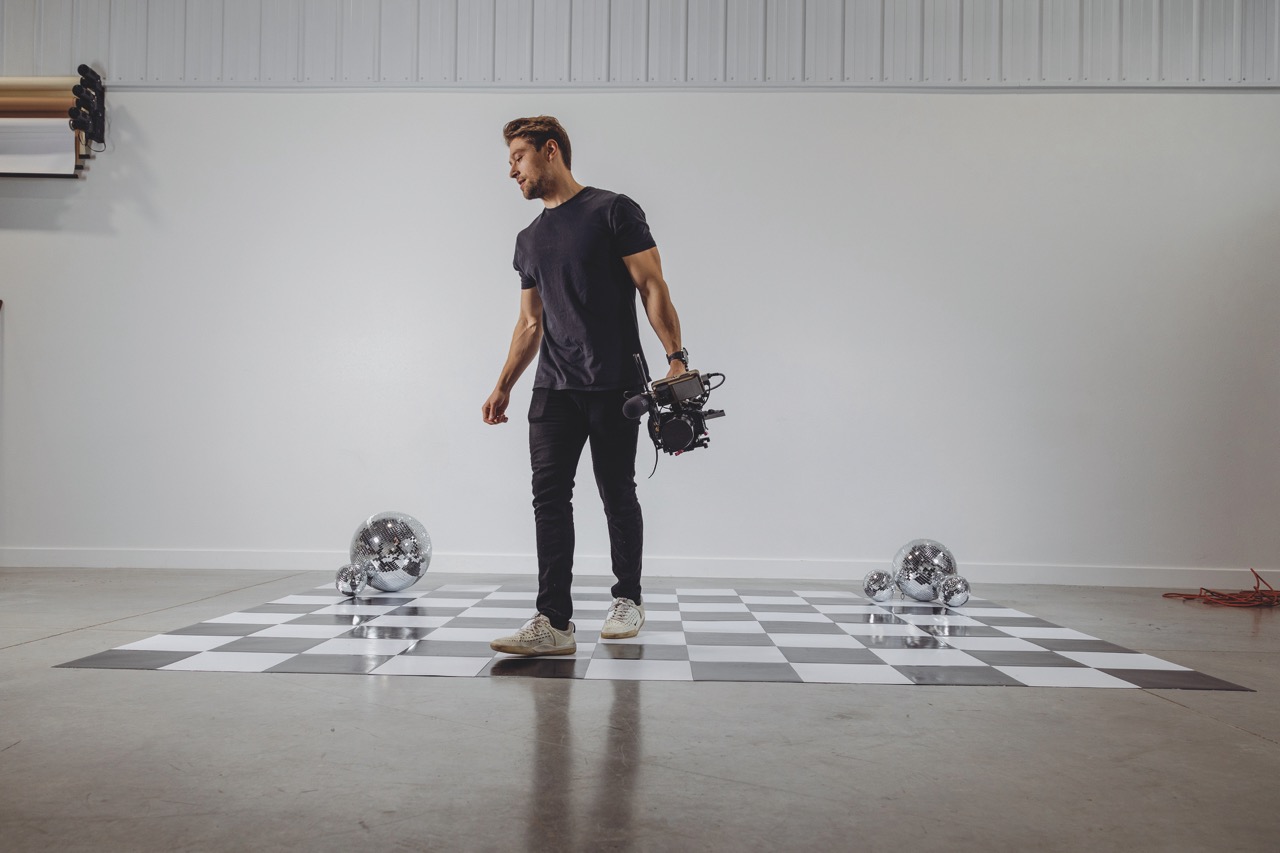
A love of skateboarding gave Mason Horacek his first lessons in filmmaking, which he now uses when shooting commercial and personal work
A long time before Mason Horacek was storyboarding commercials, shooting anamorphic glass or recording ProRes Raw, he was carrying a very different camera around his local skatepark. It was a JVC MiniDV camcorder, and what initially fascinated him wasn’t resolution, dynamic range or any other technical specification – it was the feeling created when pictures, movement and music came together.
“The excitement and energy of those first skate videos was what really hooked me,” he remembers. “I can still go back and watch them today and feel that same nostalgia. Ever since then, I’ve wanted to recreate that feeling for other people through filmmaking.”
Today, Horacek is a cinematographer based in Minnesota, working full-time for advertising agency Lawrence & Schiller. His output spans broadcast commercials, documentaries, testimonials and short films, but many of the instincts he developed following skateboarders with a camera remain part of his professional work.
“I’m a huge fan of camera movement and I feel like I learned a lot of that from filming skateboarding,” he says. “One classic skate camera angle I always come back to is shooting with a wide lens low to the ground.
“To this day I’m always trying to find a way to incorporate my skateboard into a shot, whether I’m skating alongside a bike or car, or cruising down an incline. It’s a unique skill I’ve carried over from skateboarding and can incorporate into filmmaking.”
Learning at full speed
The leap from filming friends to earning a living behind a camera came when Horacek joined Lawrence & Schiller. He describes it as his biggest break – and something of a baptism of fire.
“It was very much a sink-or-swim situation and it forced me to learn the ropes very quickly,” he says. Suddenly he was making commercials and testimonial films for major clients, with the expectations and responsibilities that entails.
“I put a lot of pressure on myself to learn as much as I could and make the highest-quality videos possible,” Horacek explains. “Working alongside my agency for so many years, constantly meeting the expectations of large clients and learning how to deliver at a high level has been one of the biggest things that pushed me forward in my career.”
That variety also means there is no standard formula for how he approaches a production. Documentaries and short films are particular favourites because they allow him to concentrate on storytelling and emotion, but Horacek believes every project needs to be considered individually.
“My approach changes with every video, whether that’s because of budget restrictions, the style we’re shooting for or the story we’re trying to tell,” he says. “Every type of project requires a different approach and a different team, and I enjoy figuring out what each one needs.”
Keep it moving
Horacek’s adaptable attitude extends to equipment. After spending much of his career working run-and-gun, Horacek has little desire to burden himself with a large cinema camera system. His main camera is Sony’s FX3, frequently paired with anamorphic lenses and an Atomos Ninja monitor-recorder.
“I’ve always had to keep my set-up as compact as possible,” he explains. “The small form factor of the FX3 allows me to get into tighter spaces without feeling like I’m carrying around a full cinema set-up.”
The choice of anamorphic glass is less about practicality and much more about character. “Anamorphic lenses are, in my opinion, some of the most cinematic lenses you can use. The squeezed image is beautiful and the lens flares have become one of my favourite parts of shooting with them,” he says.
They also complement his love of movement and shallow depth-of-field.
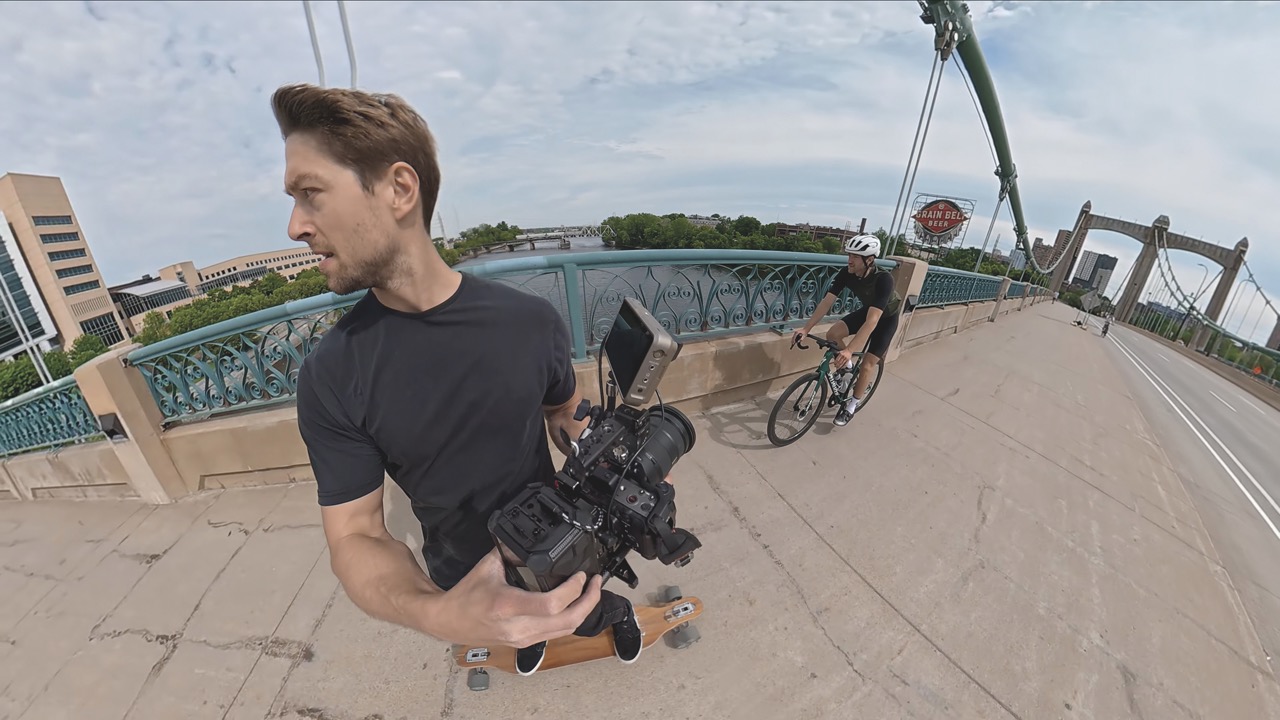
Horacek often shoots at wide apertures to create a soft cinematic background, which inevitably puts greater pressure on focusing.
That’s one reason the Ninja has become important. Its bright display gives him a clearer view than relying on the FX3’s smaller camera screen, while de-squeeze monitoring means the anamorphic image can be viewed with the correct proportions during the shoot.
“The de-squeeze features on the Ninja have played a big role in making it possible for me to film with anamorphic lenses,” he says. Focus tools and LUT monitoring also allow him to judge something much closer to the intended finished image on-set.
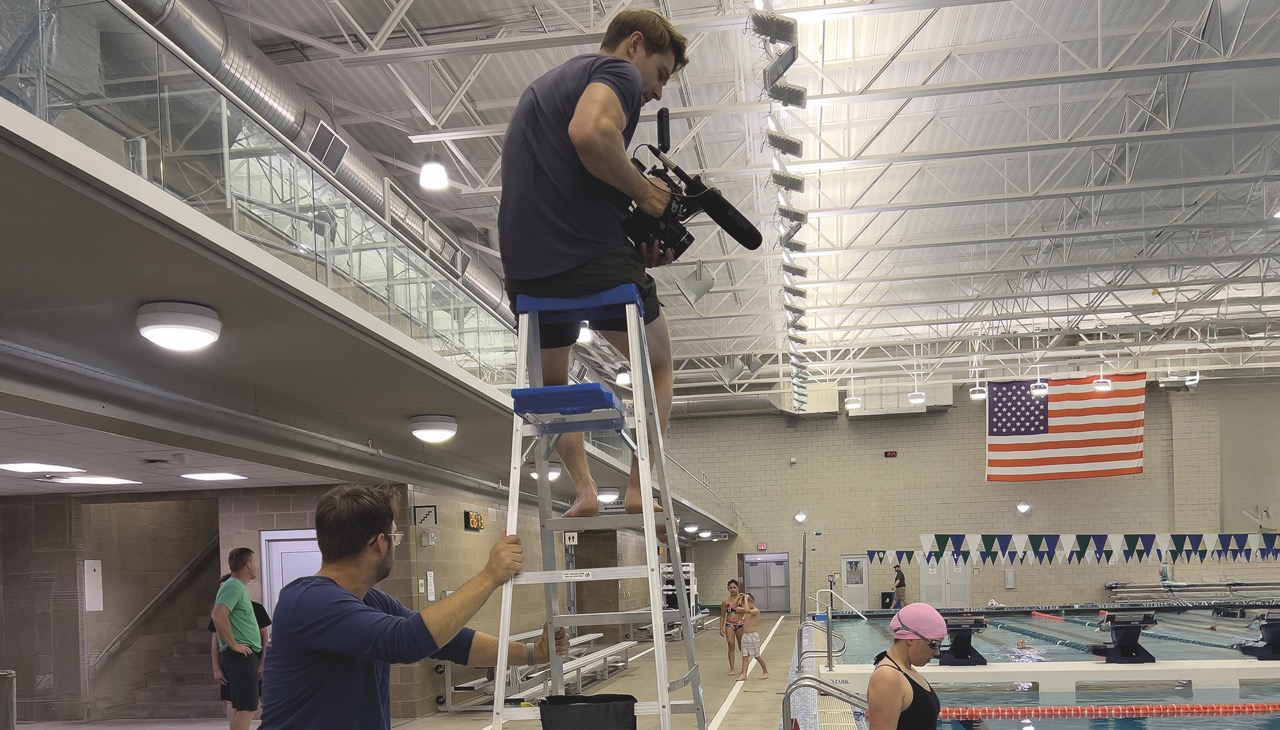
For movement, Horacek rarely turns up without a DJI RS5 gimbal and Tilta Advanced Ring Grip, which he uses for tracking work. And he actually welcomes some weight in his anamorphic lenses when shooting handheld, finding the extra mass can help settle camera movement.
It’s a compact philosophy rather than an obsession with making everything tiny. Take enough equipment to achieve the image, but make sure the kit never starts dictating what shots are possible.
Raw when it matters
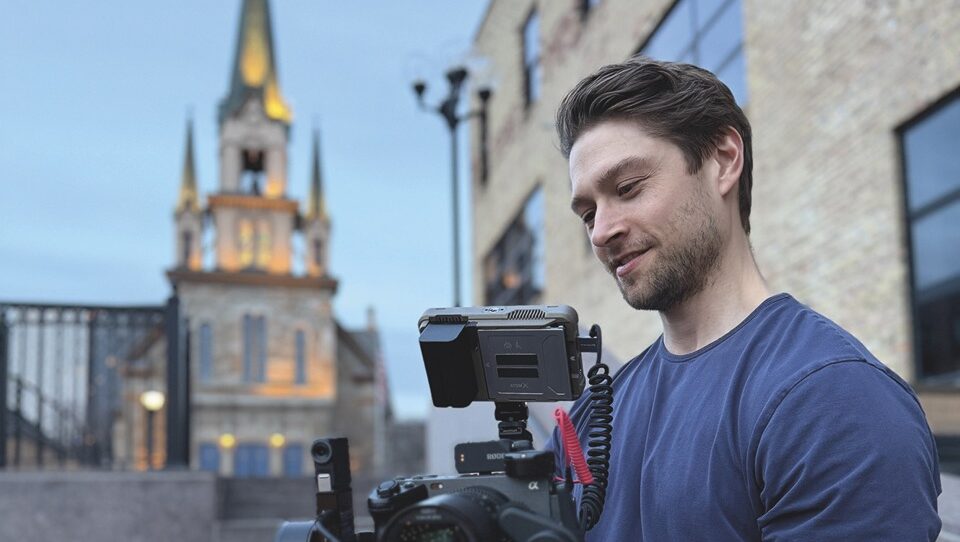
A compact FX3 camera armed with the Atomos Ninja means that there is no compromise on the quality of the footage, as the combo can record ProRes Raw for demanding productions. Horacek values the 12-bit recording and increased latitude, particularly when shooting scenes with large brightness differences such as sunrise and sunset.
“You get harsh exposure contrast between the subject and the sky, so having that extra colour depth to pull back bright highlights is hugely important,” he says. But, interestingly, he doesn’t shoot Raw simply because he can.
“For higher-budget shoots I’ll normally use ProRes Raw, but not every project necessarily requires it,” he explains. “For those shoots I’ll usually shoot
ProRes HQ, which still gives you a phenomenal image while keeping file sizes much more manageable.”
It’s a practical approach in an era when maximum specification can sometimes become an end in itself. “I try to choose the format based on what the project actually needs rather than shooting Raw just for the sake of it,” he says.
The Ninja has also become part of his high-end audio workflow, often a weak area on mirrorless-style cameras. Using an XLR adapter, Horacek can feed a high-end shotgun microphone into the monitor while also recording another source to the camera, providing four tracks from two inputs. For interview work where he might want both lavalier and shotgun coverage, it simplifies the rig while giving him redundancy.
And when a director or client wants to see what is happening, the monitor has another, less technical benefit. “Being able to hand one to a director or client so they can see the actual image themselves is a simple way to make sure everyone is seeing the same thing,” he says. “It has made our workflow noticeably smoother.”
Make films for yourself
Horacek may spend his working days producing material for clients, but he considers personal filmmaking essential. “Personal work is everything to me,” he says. “I’m very lucky to do what I love for a living, but sometimes the projects I produce for clients aren’t necessarily the things I want to film.
“It gives me the freedom to experiment and explore ideas I don’t normally get the opportunity to film. I can try new techniques, take risks and make things simply because I think they’re cool. That freedom is really important for staying creative.”
Which perhaps brings Horacek neatly back to where he began. The cameras have changed dramatically since that cheap camcorder and his productions are now considerably more sophisticated, but the motivation remains strikingly similar.
Find an interesting angle, create movement, then put the images and sound together in a way that generates a feeling. And keep experimenting until it works.
Mason’s building blocks
Keep moving
Skateboarding taught Mason Horacek to think dynamically. Try low angles, tracking movement and unconventional camera positions rather than always defaulting to eye level.
Choose the format for the job
Maximum quality isn’t automatically the right choice. Horacek uses ProRes Raw when the production benefits from it, but ProRes HQ when smaller files make more practical sense.
Don’t overcomplicate the solution
A stick dropped into shot by a crew member or tape marks on a Dana Dolly can solve problems that might otherwise demand expensive equipment.
Make personal work
Client projects build a career; personal films develop your creativity. Use them to experiment, fail safely and try ideas you couldn’t justify on somebody else’s budget.
Never stop playing
From putting a skateboard underneath the camera to writing around having only one actor available, Horacek’s best ideas often come from treating limitations as opportunities.
Touch and go with the super Shinobi
After 15 years working in photography and video, Jon Bailey has learned that outdoor filmmaking rarely waits for you to catch up. Light changes, subjects move and the camera might be rigged somewhere that makes its own controls difficult to reach.
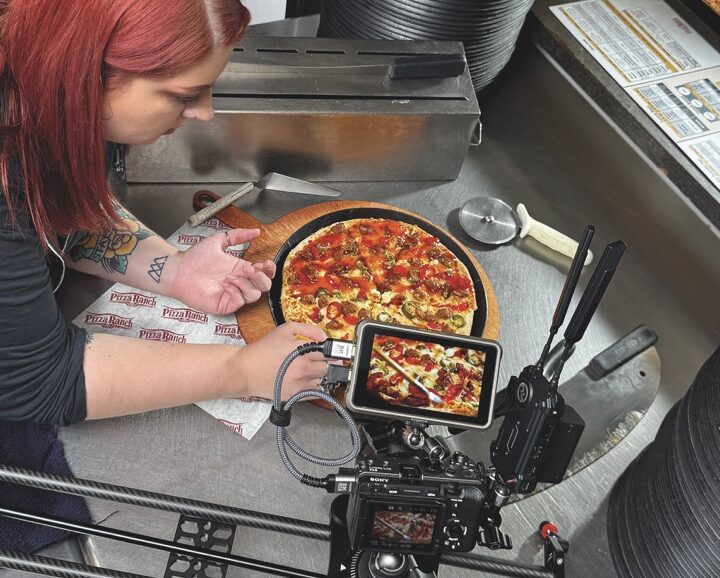
That’s why his Canon EOS R6 Mark II is paired with an Atomos Shinobi II. Unlike the Ninja monitor-recorder used by Mason Horacek, Bailey’s Shinobi II is all about monitoring and camera control. “Being able to control key settings directly from the screen makes everything much more responsive,” he says. “When you’re working outdoors or in uncontrolled lighting, relying on the camera screen alone can be limiting.”
Touchscreen camera control and touch-to-focus let Bailey react without interrupting the flow of a shoot, while false colour gives him an immediate check on exposure as daylight shifts. Focus peaking is particularly useful when working with his fast Sigma 50mm f/1.4, where depth-of-field can become extremely shallow.
He also loads LUTs into the monitor to see a closer representation of the intended finished image while shooting.
On one recent outdoor production, rapidly changing light put the system to the test. “Exposure stayed controlled, focus was locked in and I wasn’t second-guessing anything,” says Bailey. “The footage coming straight out of the camera was clean and consistent, which saves time in post.”
For a filmmaker who built his career shooting everything from angling and outdoor brands to property and events, that confidence matters.
This article was first published in the September/October 2026 issue of Pro Moviemaker