
Datacolor: Why daylight is NOT 5600K
Posted on Sep 3, 2026 by Pro Moviemaker
Filmmaker Rob Ellis uses real-world measurements to reveal that recreating convincing daylight is a skill that can be mastered if you use the right kit
Many filmmakers believe accurately recreating natural daylight is simply a matter of setting the LED lights to 5600K and hitting record. But the reality is far more interesting, and doing it right can transform the look of your films.
One of the most experienced filmmakers at mastering a realistic daylight look is Rob Ellis. Armed with the Datacolor LightColor Meter, he tells Pro Moviemaker all about his failsafe method and how to recreate it inside a small room after dark.
When Ellis set himself this challenge, he proved recreating natural light was less about finding one ‘correct’ daylight Kelvin setting, and more about understanding all the different colours that combine to create what our eyes perceive as daylight.
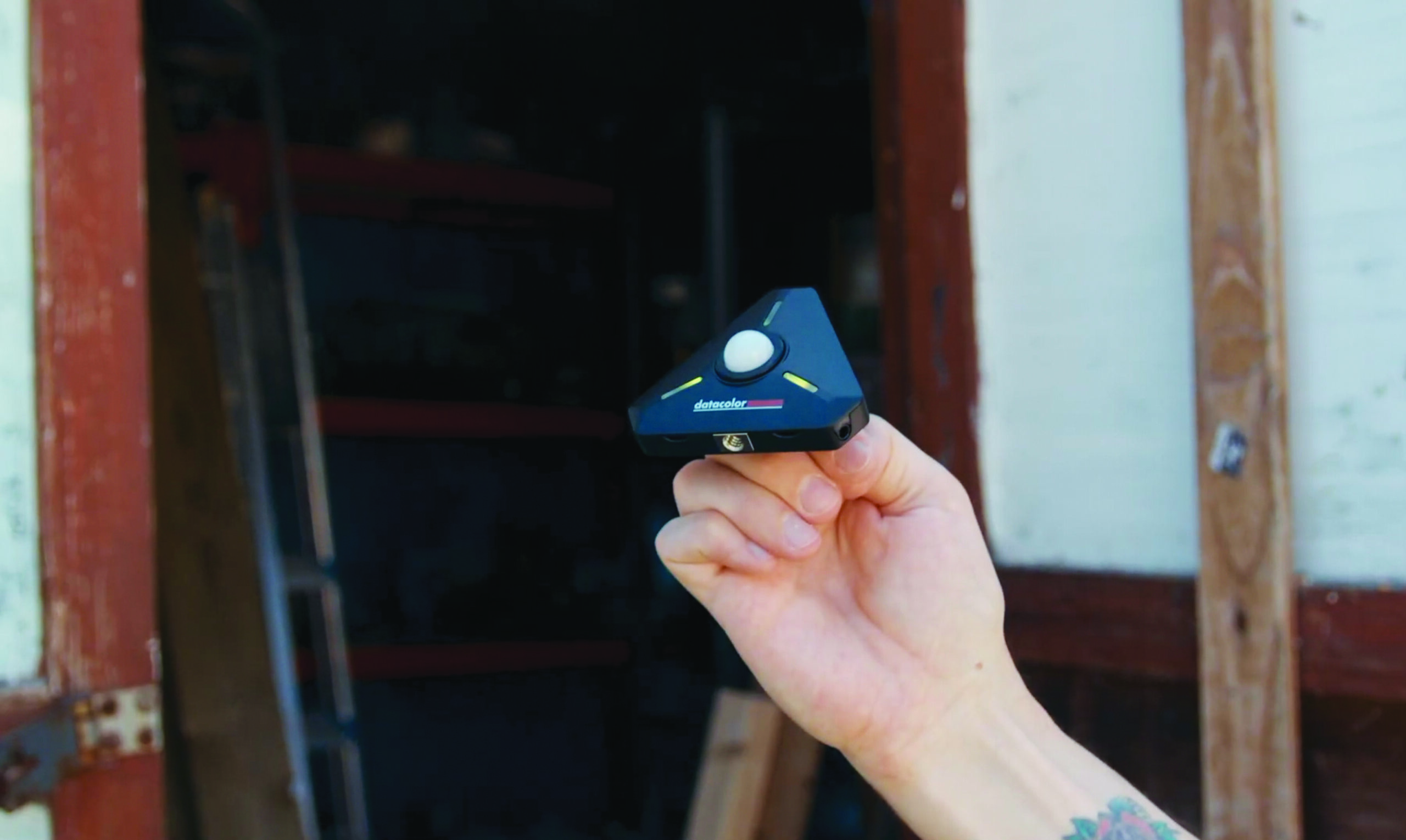
His starting point was accurate measurement. A conventional light meter measures the intensity of light falling onto its lumisphere, giving you the information needed to set the right exposure. But the Datacolor LightColor Meter adds another crucial dimension by measuring the space’s colour characteristics. This is all thanks to communication with a smartphone over Bluetooth.
Sun plus sky
The first measurement was direct midday sunlight in the garden outside the location using the Datacolor meter, which read 5760K – explaining why somewhere around 5600K has become shorthand for ‘daylight’.
But direct sunlight is only part of the illumination. Look away from the sun and there’s an enormous source surrounding it – the blue sky – and its light is cooler.
Ellis moved into shade to remove much of the direct influence of the sun and measured again. This time the LightColor Meter said 9980K.
To mimic the direct sunlight, Ellis used a 500W fixture fitted with a fresnel, focused through the window and set to the measured 5760K. A net curtain helped with diffusion to let some of that light bounce around the room.
The sky required something very different, so a second fixture at 9980K was directed into a 6x6ft frame of bleached muslin above the window, creating a much larger and softer source.
Then Ellis compared the result with a shot captured in the same room under genuine daylight using the same camera white-balance, but the artificial version was much too cool.
When the numbers lie
The 9980K reading had been taken in an area of shade, but that’s not necessarily the same colour of light that was actually entering the window. Ellis took another measurement in the garden and obtained a very different 5380K. Looking at the surroundings, there was a brown fence nearby, while sunlight was bouncing from a white wall opposite. The light reaching the meter was a mix of wavelengths reflected by everything around it – and the tint can shifts towards green or magenta as well as becoming warmer or cooler.
So Ellis put the meter where it really mattered: inside the window with the real daylight illuminating the room.
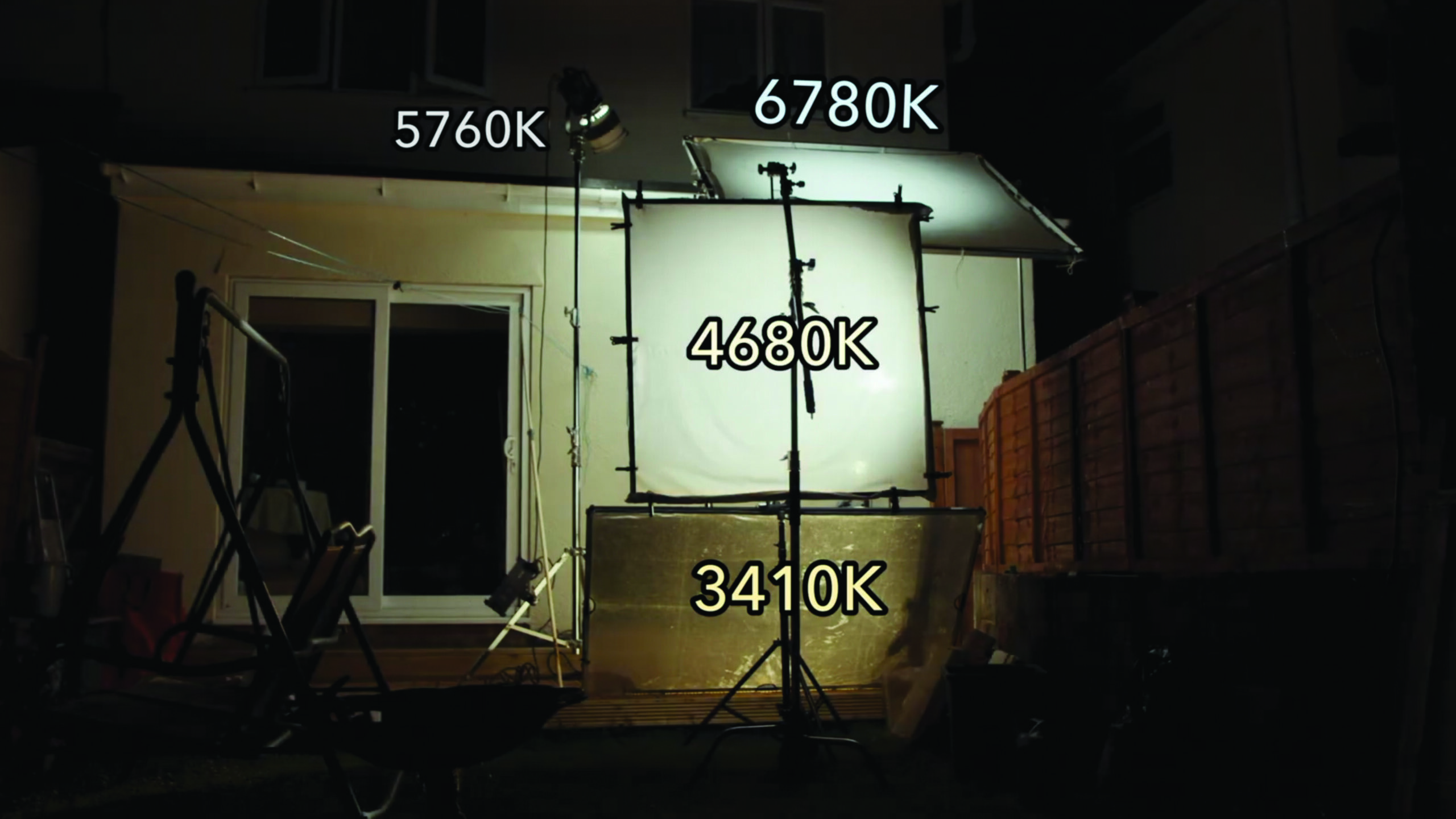
Direct sunlight measured around 5700K, which was reassuringly close to the original 5760K. But when the meter measured the softer ambient illumination entering the room, the result was 6780K – nowhere near the 9980K measured outside.
That reading represented the combined effect of the sky and environment from the direction relevant to the shot.The artificial sky source was therefore reduced from 9980K to 6780K, and immediately things looked considerably more natural. But something was still missing.
Bouncing back
Looking outside again revealed another important ingredient. Sunlight wasn’t simply travelling from the sky through the window. It was hitting the garden, decking, walls and other surfaces before some of it bounced back into the room. Ellis measured the light reflected from the decking at 3410K.
That warm reflected light was then recreated using a fixture at 3410K and bounced from a 6x4ft frame of white material towards the window. Suddenly, the look of the ‘real’ and ‘artificial’ shots became much closer.
Finally, Ellis measured the average temperature of daylight bouncing from the wider garden. This came in at around 4680K. A further light fixture, which was directed into a 4x4ft frame of bleached muslin, was then added at approximately that temperature.
The result was a convincing recreation of daylight, despite the exterior actually being totally dark. Crucially, no single fixture was simply set to ‘daylight’.
There’s no magic number
Natural illumination is messy because direct sunlight has one characteristic, open sky another. Both interact with buildings, vegetation, ground surfaces and practically everything else around a location. Measuring real light allows you to understand why it looks the way it does. Once you’ve broken a lighting condition into its component parts, you can reproduce it deliberately or start manipulating those components creatively.
That’s where the Datacolor LightColor Meter becomes more than a device for checking whether an LED produces the Kelvin value printed on its display. It’s a way of reverse-engineering light. The aim is to understand what nature is doing enough that you can decide what to copy, what to exaggerate and what to ignore. Because convincing daylight isn’t necessarily 5600K. Sometimes it’s 5760K, 6780K, 3410K and 4680K – all at the same time.
This article was first published in the September/October 2026 issue of Pro Moviemaker