The sound of success: Austin Huffman on capturing automotive audio
Posted on Nov 27, 2026 by Lily Smith
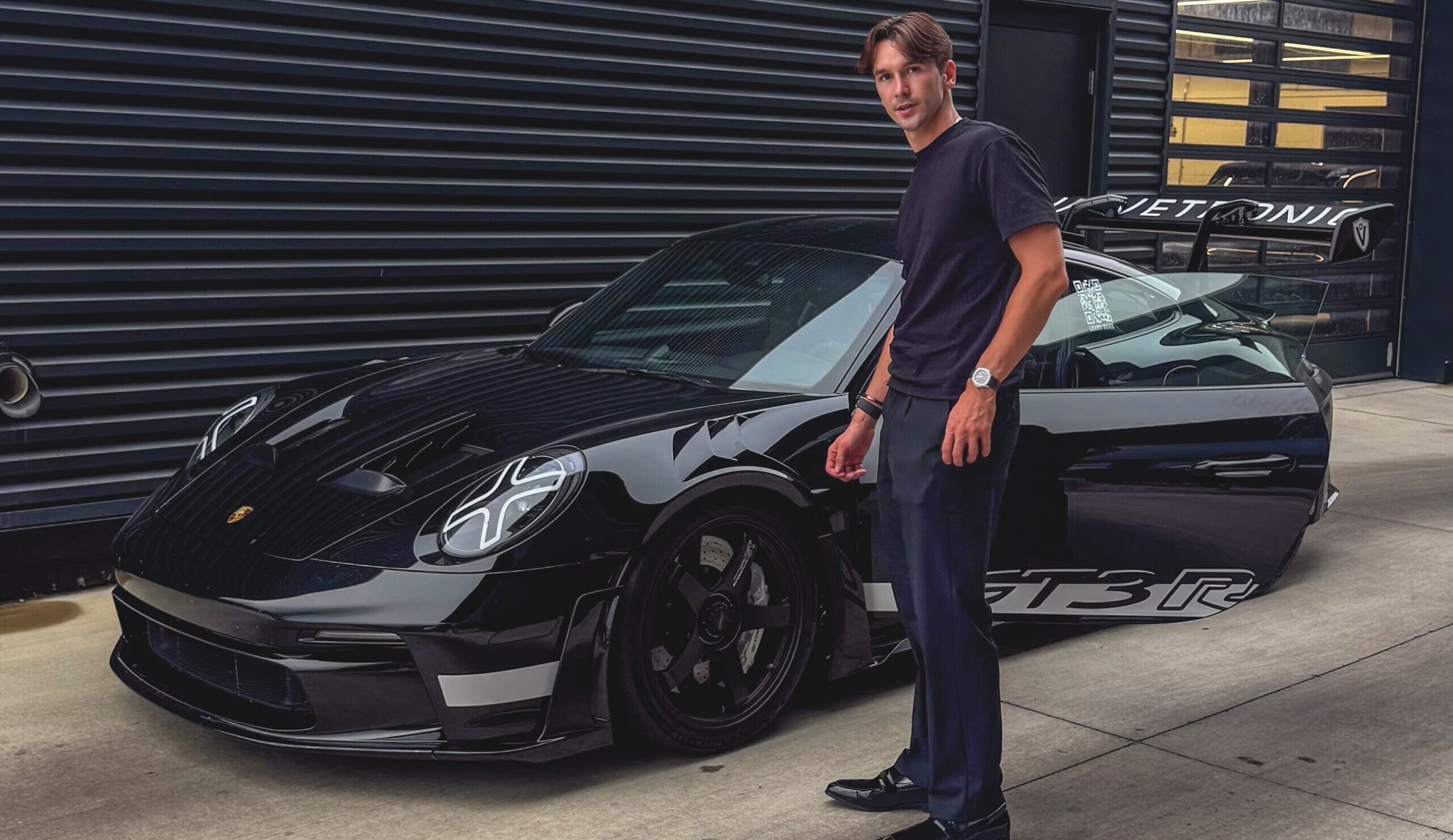
The roar of a performance car is the ultimate soundtrack for petrolheads – and capturing it is becoming serious business. For American automotive entrepreneur Austin Huffman, capturing the visceral sound of a high-performance car isn’t just about making great content. It has helped turn social media into a powerful engine for business growth.
There are many filmmakers who would be horrified at the suggestion that the soundtrack to their lovingly crafted film should consist largely of an engine being revved, accelerated hard through the gears and blipped through a series of downshifts. No carefully chosen music and sound design to give the edit pace and emotion, just the raw sound of a roaring motor.
“For the talking segments, we maybe have some very low background music,” says Shane Rush, the filmmaker in charge of Huffman’s media output. “But throughout the actual sound clips of the car, interior and exterior, no music. We want the exhaust to be the music.”
When the product you’re selling is a performance exhaust system, that makes perfect sense. Huffman’s rapidly expanding automotive business has made social media and filmmaking fundamental parts of its marketing strategy. Together, they have developed an approach that mixes highly polished product filmmaking with YouTube, Instagram and TikTok content, spontaneous lifestyle material and Huffman’s growing personal following.
Of course, camera, editing and social strategy certainly matter. But in this business, sound sells.
Starting young
Huffman’s entrepreneurial streak appeared very early. His family had a summer house in Rhode Island, across the road from a beach where parking was scarce. At just 14, the young automotive fan spotted an opportunity. He would stand outside with a sign offering beachgoers somewhere to leave their cars for $20 or $30. For around $100, he’d also valet the car while its owner was enjoying the beach.
“I was shuffling cars in and out with my vacuum and my mother’s cleaner, trying to make some money,” he recalls. “That’s where the entrepreneurial vision began.”
Cars were already an obsession. He devoured magazines and fantasised about what he might own once he was finally old enough to drive.
Huffman saved money until he could afford his first BMW, even before he was old enough to drive. But it soon caused an argument with his mother that inadvertently provided the seed for a business. Huffman modified the BMW to make it louder. His mother hated it and issued an ultimatum – he had to sell the car or quieten it down.
Then she asked, why couldn’t it be quiet when necessary but loud when her son wanted it to be. “I thought, that’s a good idea,” he says.
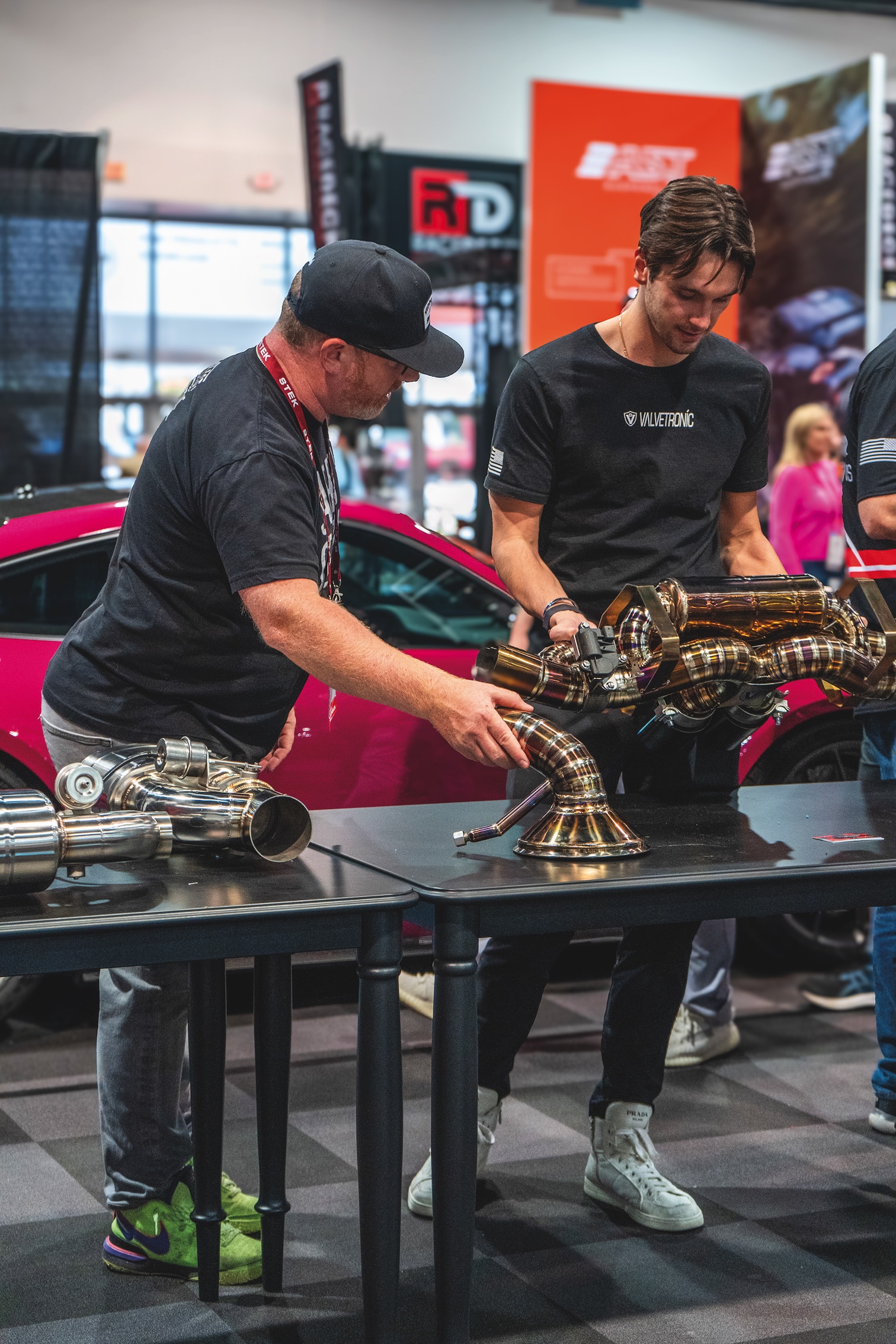
He engineered a valved exhaust incorporating a flap, and built a control module for it – and it worked. He soon realised others might want the same, but the crucial next step wasn’t a conventional advertisement. He put it on YouTube, and like-minded car nuts started asking if they could buy one. While studying at Lehigh University, Huffman received help with the mechanics of establishing the company, while a supplier in Pennsylvania manufactured the early units.
First he built ten, and all sold quickly. Then he built 25 and sold all 25. From there came exhaust systems for BMWs, Porsches, Ferraris and other performance cars, followed by expansion into an operation – Valvetronic Designs – that Huffman says now employs close to 50 people.
But alongside engineering and manufacturing, something else was becoming integral to the company’s success: cool content.
Sell the experience
Huffman understands something that many businesses are still discovering, which is that customers don’t necessarily encounter a product when they’re ready to buy it. A teenager watches a YouTube video of a McLaren with a particular exhaust system and saves it. Perhaps he’ll never own a McLaren, but that clip becomes part of an aspiration: ‘One day I’ll have a fast car, and that’s how I want mine to sound.’
“Finding the right exhaust usually comes from someone finding a YouTube video that they absolutely love and resonate with,” says Huffman. That means the video isn’t simply an advert accompanying the product. In many cases, it’s the customer’s first experience of it.
Huffman consequently set his media team the objective of creating the best videos to show why Valvetronic’s products are special. His 333,000 individual followers on his personal Instagram page @heyafb and 559,000 on @valvetronic prove his content is hitting the mark.
“There are a lot of people that sell exhaust systems,” he says, “but nobody does media and content creation like we do. You can create the most badass, craziest exhaust in the world. If no one knows about you, they can’t buy.”
For Rush, however, communicating an exhaust isn’t simply pointing a camera at the back of a car and recording some revs. “It’s not only information, but also showcasing the experience,” he says. “It’s the way the car and exhaust work together and the way it makes you feel.”
That emotional response is crucial. The films don’t just show a piece of stainless steel and explain its engineering. They try to let the viewer imagine owning the car.
The product is the sound
Recording cars presents some unusual audio problems. An exhaust can generate enormous sound pressure levels, while wind, tyre noise and changing distance from the microphone make clean recording difficult. More fundamentally, there isn’t one definitive place from which a car should be heard.
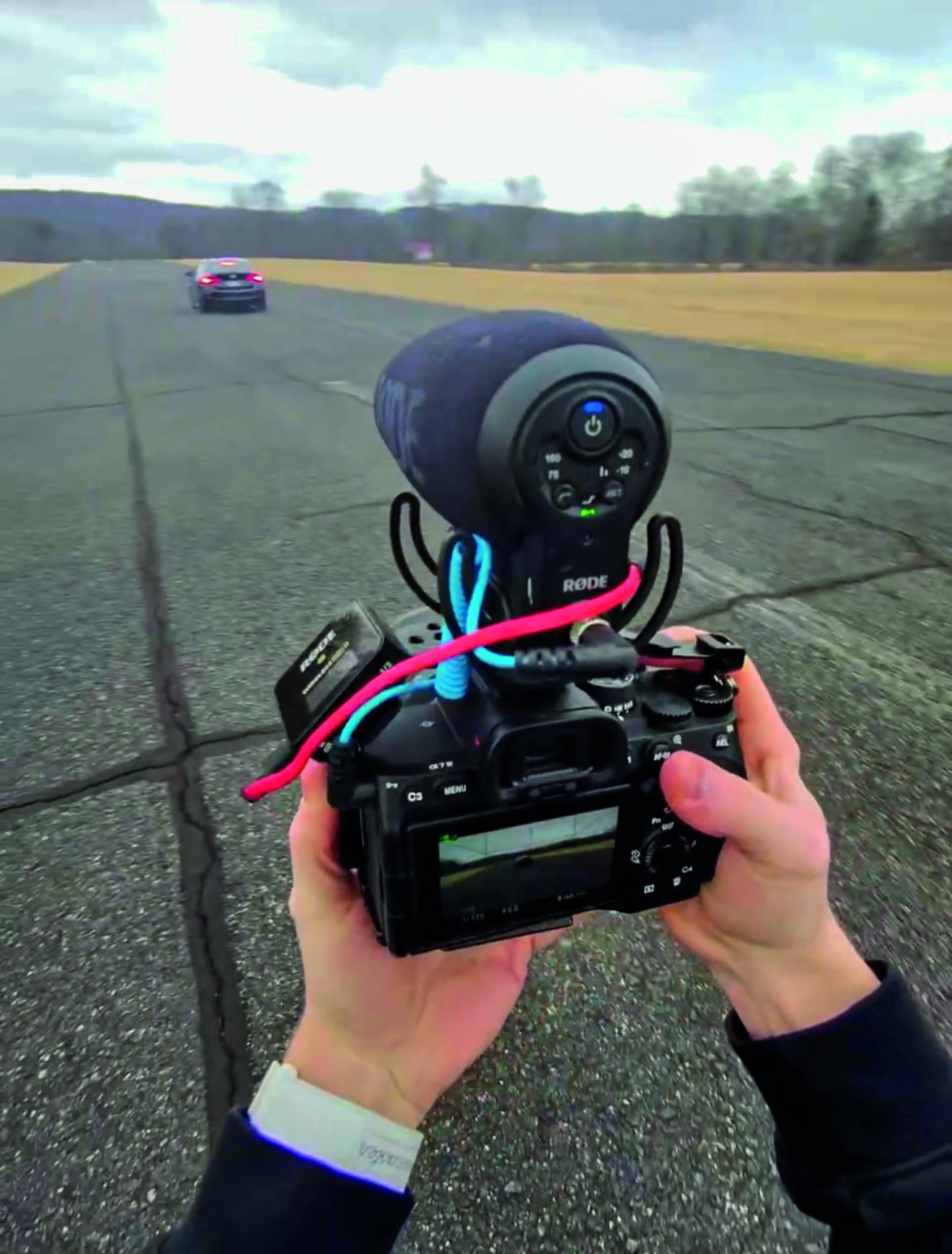
Rush deliberately captures different perspectives. For exterior sequences, his preferred approach is a Sennheiser MKE 600 XLR shotgun microphone mounted with substantial wind protection, used with the team’s Sony cameras – a mix of FX3s and A7 IVs. Rather than attaching the microphone close to the exhaust itself, Rush positions the recording set-up away from the vehicle and has the car drive past it, because that’s how a person would actually hear the car.
“If we had a mic on the back of the car, that doesn’t really communicate exactly how others are going to hear your exhaust,” he explains. “We like using a shotgun mic on the camera itself. When we’re driving by the camera, it’s as if you were hearing the car from the outside.”
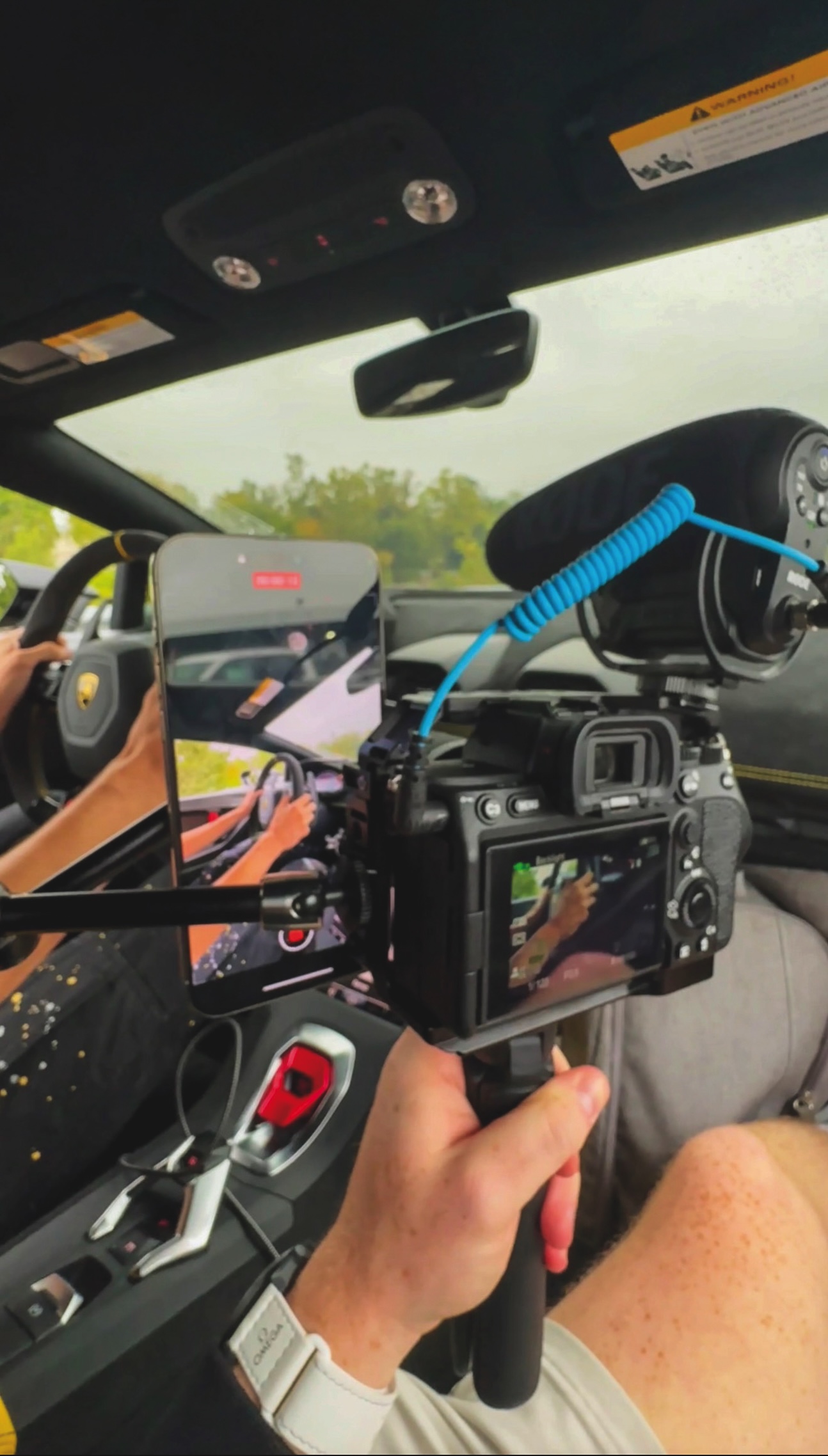
The team then provides the other side of the experience. A separate section puts the audience inside the car, effectively in the passenger seat. The viewer hears acceleration through the gears, downshifts and, importantly, the difference between the exhaust valves being open and closed. This is often recorded on a more portable Rode Videomic Pro+, sometimes with a Rode Wireless Go kit, which can be used with a lav mic for dialogue or capturing exhaust noise from a more distant location.
“We go through all the different sound characteristics outside and inside the car too,” says Rush. It’s a lesson for filmmakers working with any product where sound matters: don’t simply record the cleanest possible sound; record the sound from the perspective your audience actually wants to experience.
A repeatable formula
Despite the spontaneous appearance of much of the company’s social output, its core product films follow a surprisingly disciplined formula. For advertising and paid short-form campaigns, the team may storyboard and hold planning meetings. The longer YouTube product films are based on a format developed several years ago and refined through repetition.
When a car arrives, the exhaust is installed and any necessary development work carried out. Rush captures that process before filming an introduction underneath the vehicle, showing the hardware and explaining what makes the particular system different.
Then comes the fun part. The car is taken to a closed-course airstrip, where the team repeats a series of established shots and audio tests to demonstrate its different sound characteristics.
That consistency has another advantage. After producing thousands of pieces of content, Rush has an enormous amount of information about what audiences actually respond to. “Good content will do well,” he says. “But you’ve got to understand the data as well.”
The opening seconds are critical. Rush reckons creators may have around two seconds to hook someone before they’ve disappeared down their feed.
The production workflow is also designed around the realities of modern content delivery. Every vehicle gets a long-form YouTube film, but short-form material is captured at the same time. As well as the team’s Sony Alpha cameras, GoPros are also used for point-of-view perspectives, as they feel more authentic and of-the-moment.
Rush deliberately composes many shots with the car centrally positioned, so that footage acquired horizontally can subsequently be reframed vertically. That allows one production to feed conventional 16:9 YouTube alongside 9:16 social output.
Nor does Rush automatically reach for the highest available resolution or frame rate. Although slow motion is occasionally used for B roll, much of the material is captured at 4K⁄60p.
It’s a compromise between image quality, the way audiences actually consume the material and the burden huge files place on editors and the company’s network-attached storage. The best settings aren’t necessarily the headline numbers each camera can reach but the ones that make the whole production work.
Post it all
Rush has another rule that ought to be pinned above the desk of every aspiring creator: just post it. “We’ve invited people out to these shoots and I say it all the time along with Austin: it does no good sitting in your camera roll.”
His team works with the company’s marketing department to find uses for captured material. A clip might be published tomorrow or rediscovered two or three months later, but the objective is to extract value from what they’ve shot, rather than allowing potentially useful content to disappear into an archive.
Huffman agrees, and is considerably less delicate about it. “Everybody gets so in the weeds of, ‘Oh, this, that, the cut, the colours aren’t right.’ No one cares. Post it.”
That doesn’t mean quality is irrelevant. The company has invested heavily in making its films look and sound good. But it’s a warning against allowing perfectionism to become an excuse for inactivity. Rush has spent eight or nine hours working on videos that subsequently flopped. Meanwhile, a four-second clip of Huffman driving a car has achieved four million views.
Until you publish, study the reaction and learn your audience, you simply don’t know what might work.
People buy people
There’s another evolution taking place in Huffman’s content. Originally, his personal channels were overwhelmingly about driving, speed, noise and automotive lifestyle where the cars were the stars. More recently, he has been getting his face in front of the camera.
“My talent manager tells me all the time: ‘You’ve got to post more about you.’” It’s working. Huffman says people increasingly recognise and approach him as his content has become more personal.
Some of the most effective material isn’t planned at all. Huffman might be out with friends, when an interesting car arrives and somebody grabs a camera or phone. The group routinely photographs and films one another, constantly thinking about angles and potential posts. That lack of polish can itself be the attraction.
“We just capture it in an authentic fashion,” says Huffman, “because usually that’s what does the best for us.”
The polished commercial filmmaking and spontaneous creator content aren’t competing philosophies, as they perform different jobs. When the company needs to explain exactly how a new exhaust fits, operates and sounds, Rush makes sure to produce controlled, repeatable content. When the objective is building Austin’s personality and community, spontaneity becomes an asset.
Teamwork that works
Spontaneous filmmaking uses different skills from those of full-blown cinematic productions, says Huffman. He describes shooting rolling car-to-car sequences with Rush and their friend Alex. The trio have worked together so often that they barely need to communicate. “We don’t even use radios. We don’t even talk on the phone.”
Instead, using indicators and familiar hand movements communicate where the cars should position themselves without needing to stop and plan. They can spend 45 minutes intensely focused on driving and filming, and return with around 150 clips. That kind of intuitive collaboration comes from repeatedly shooting together until everyone understands what the others need.
The technology is important too, as their Sony cameras, Sennheiser and Rode microphones, GoPros, editing systems and storage infrastructure all help them produce huge amounts of professional content. But none of it matters without knowing what the audience wants to see and hear.
For Huffman’s customers, an exhaust isn’t merely a collection of pipes, valves and silencers. It’s aspiration and emotion, imagining what their own car might become.
Sometimes the smartest thing a filmmaker can do is just point the microphone at the road and let the engine make the music.
Shane Rush’s approach to capturing an exhaust’s sound
GIVE IT PERSPECTIVE
Don’t automatically put the mic beside the exhaust. Rush records exterior drive-bys from where a spectator would actually hear the car.
TAKE IT INSIDE
Interior recordings put viewers in the passenger seat, capturing acceleration, gear changes and downshifts.
SHOW THE DIFFERENCE
For valved exhausts, Rush records both open and closed settings so customers can hear exactly what they’re buying.
CONTROL THE WIND
Shooting cars outdoors and in action means moving air and exposed locations, so wind protection on the microphone is essential.
KILL THE DJ
Music is kept very low beneath speech, and is removed altogether for the key exhaust demonstrations. The exhaust sound is the music.
Five lessons from Austin Huffman’s social strategy
1. STOP WAITING FOR PERFECTION
A great film that nobody sees has zero marketing value.
2. LEARN BY PUBLISHING
You can’t reliably predict winners. Publish, analyse the response and learn.
3. HOOK IMMEDIATELY
On short-form platforms, assume you’ve got roughly two seconds to earn attention.
4. SHOOT ONCE, PUBLISH EVERYWHERE
Compose with horizontal and vertical delivery in mind so that one shoot can produce YouTube, Reels, TikTok and other assets.
5. PUT PEOPLE IN THE STORY
Huffman’s channels increasingly feature Austin himself, rather than just showing beautiful cars. Personality builds the relationships that product advertising can’t.