Big test: Fujifilm GFX Eterna 55
Posted on Apr 8, 2026 by Pro Moviemaker
The large format cinema camera with a sensor shape that changes how you shoot
Words Adam Duckworth
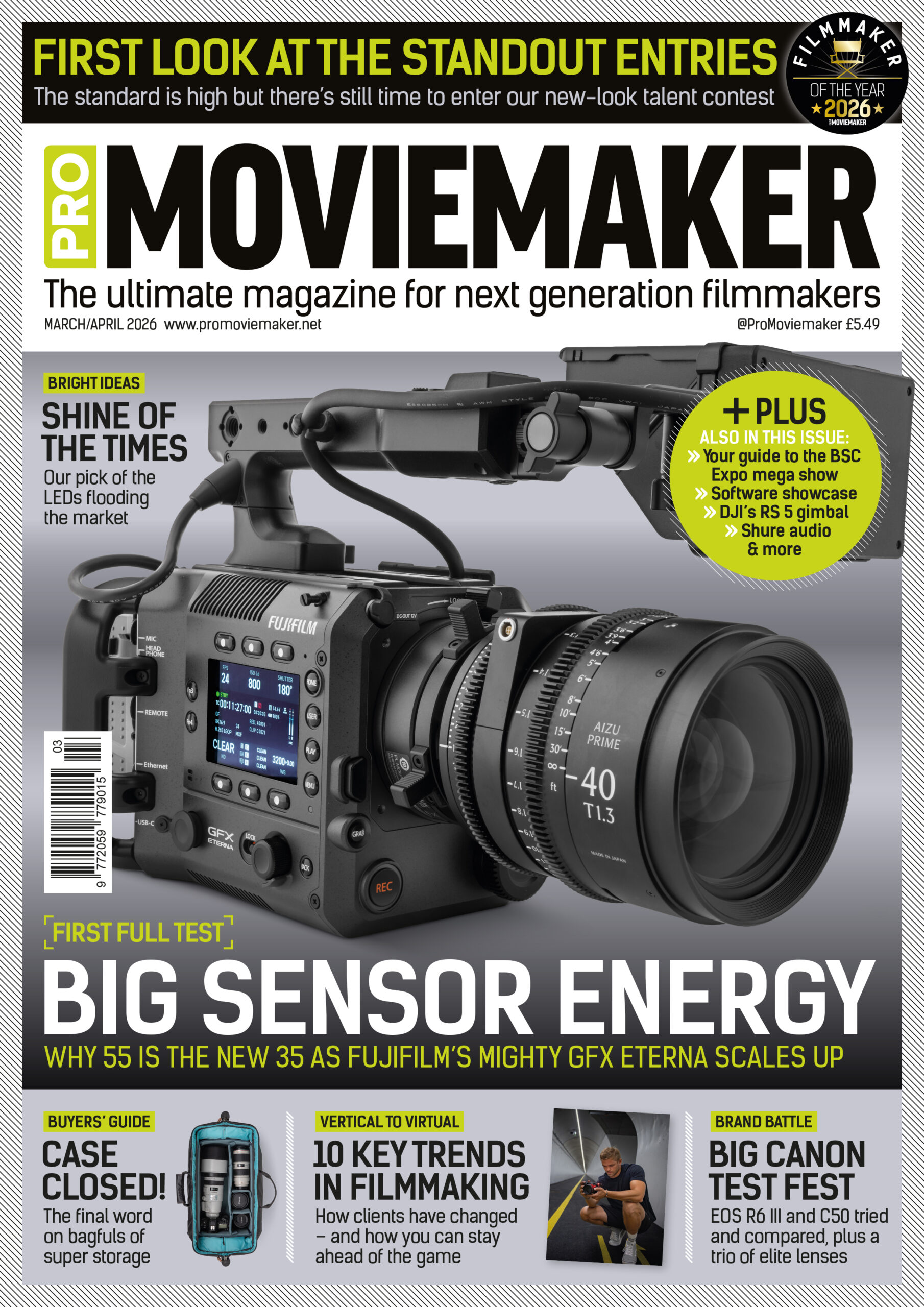
Fujifilm has made mirrorless cameras for years that shoot amazing video, but the GFX Eterna 55 is something else entirely. This is its first purpose-built digital cinema camera and as with its mirrorless range, the Eterna doesn’t just chase the same full-frame checklist as everyone else. Instead, it leans hard into what Fujifilm can uniquely bring to cinema, which is large format imaging, great colour science and a distinctly tall sensor that genuinely affects composition, lens behaviour and therefore the look of the images.
Our own test of the Eterna wasn’t in a full-on cinema-style shoot with finely controlled lighting, but a typical run-and-gun commercial filmmaking scenario. Yet it still delivered unique footage, thanks to its large sensor needing lenses with correspondingly longer focal lengths to give the same viewpoint as full-frame. Just like the big boys use in Hollywood.
The real question is whether that difference, as well as the cinema-centric ergonomics, is enough to justify its high-end positioning for indie filmmakers. Because, at £13,998/$16,500 body only, it might not be in Arri Alexa territory but certainly faces tough competition from the likes of Red’s V-Raptor or the Sony Burano.
So to see if it’s right for you, let’s take a look at seven key issues as we answer the Eterna question.
What going large means
The camera is built around the GFX100 II sensor and processor, but in a chassis and workflow that cinema crews expect. That’s robust I/O, timecode and genlock, serious monitoring, internal electronic ND and a more production-friendly body. This is far from a hybrid that happens to shoot video very well – like the GFX100 II. It’s Fujifilm’s first official step into modern digital filmmaking.
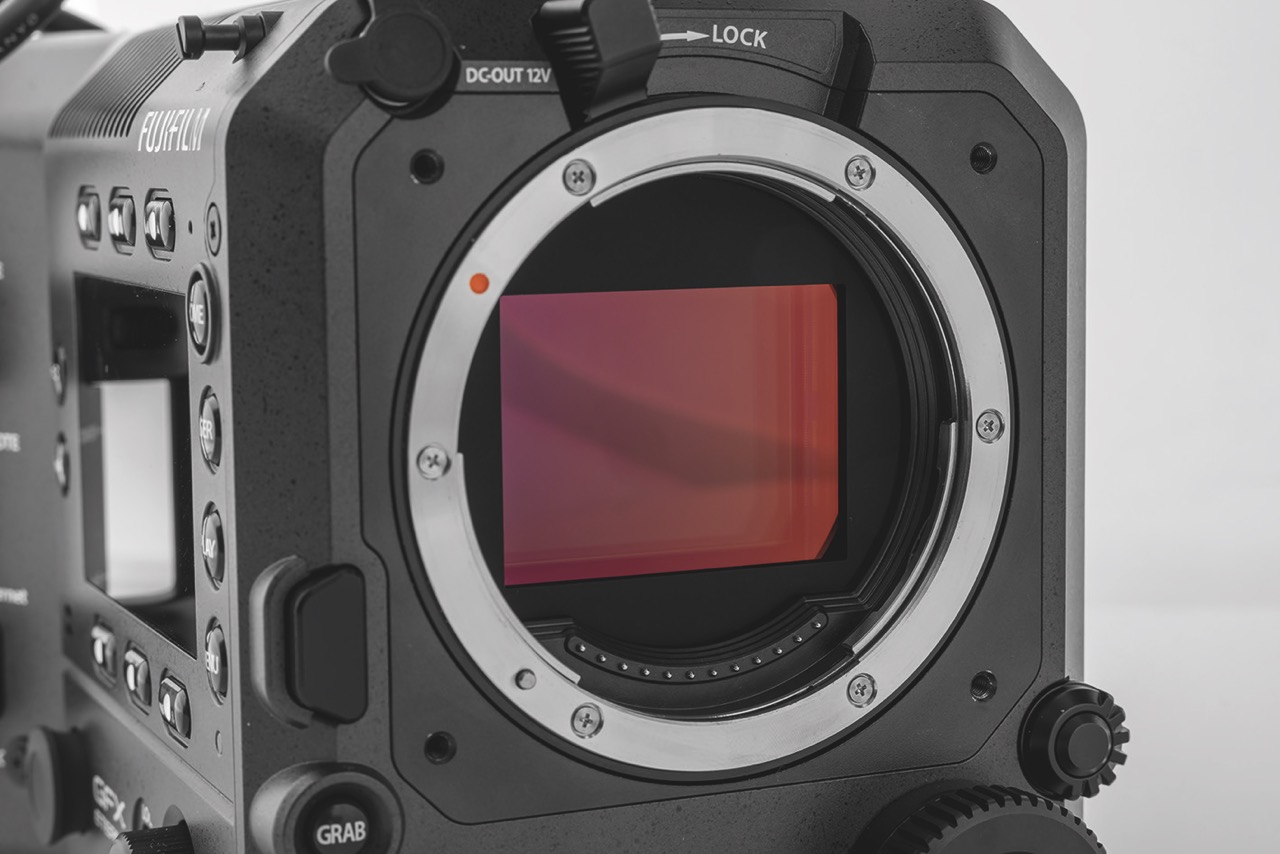
Of course, the headline feature is the tallest ‘large format’ sensor you can buy. The 43.8×32.9mm 8K sensor is roughly 75% larger than full-frame, with a native 4:3 aspect ratio. Fujifilm frames this as ‘large format’ in cinema terms rather than ‘medium format’ as it’s labelled in the stills world because the industry typically labels anything larger than Super 35 as large format today.
This sensor is not only wider than full-frame by about 20%, it’s about 30% taller – and that height is the real secret sauce. If you’ve shot open gate on other cameras, you already understand the flexibility for reframing and cropping. For anyone mixing cinematic widescreen delivery with social cutdowns, vertical reframes or dynamic stabilisation in post, it’s a big deal.
Why sensor height matters
The Eterna’s 4:3 open gate isn’t just more room to crop, it changes the way the camera sees. In open gate, a 45mm lens behaves in a way that’s instantly noticeable, giving you a field of view similar to 35mm on full-frame, yet retains the perspective and depth-of-field characteristics of a true 45mm. That combination reduces the wide-angle feel which can make faces and spaces feel more natural, especially in close quarters. This is where the Eterna earns its keep as its imaging format isn’t just spec-sheet flex but tangibly affects composition choices and the feel of scenes.
The Eterna brings real flexibility in outputs. It offers cropped sensor modes, so you can work down into more familiar formats, or scale up into the full large format canvas. You can choose Fujifilm’s Premista size as well as different anamorphic options with de-squeeze monitoring, so there are lots of sizes and shapes to choose from – many of which affect the maximum frame rates. With 8K limited to 24fps, to get 30fps you need to be at 6.3K or below, while rates up to 60fps start at C4K or below. As you can see, this is no speed monster to rival a Red, for example.
Where things get really interesting is anamorphic. The camera’s sensor height gives more usable image area for de-squeeze and crop decisions. Fujifilm highlights squeeze ratio outcomes like 2:1 – a very flexible delivery format – plus 2.66:1, which is often cropped to 2.39:1, as well as 2.40:1, which lands close to 2.39:1 without heavy cropping.
Anamorphic often feels most rewarding when you have enough height to work with and the Eterna’s sensor is built for that. Rolling shutter is well controlled but, once again, this is a large-sensor cine camera so not really built for superfast whip pans.
Raw deal on formats
The elephant in the room is that, to some, there is one big drawback – no internal Raw video recording. That’s something many might expect at this price. Even Nikon’s ZR mirrorless camera has a selection of different Raw internal capture modes and you could buy six of them for the price of one GFX Eterna 55. But a cinema camera is a different animal, and if you must have Raw for the ultimate in quality and grading you can export 4:3 open gate 4K Raw up to 48fps over HDMI, or 30p over SDI, to an Atomos monitor-recorder.
In fairness, the footage still looks excellent without internal Raw – especially if you’re recording robust ProRes and exposing carefully. However, this omission may well be a dealbreaker for some productions, particularly those building a workflow around Raw as standard.
Some may at least expect ProRes 4444 as standard for such a pricey camera. This is full colour resolution for every pixel and would make it ideal for VFX or high-end virtual work. But the Eterna tops out at ProRes 442, which reduces the colour data slightly, but is a solid codec for real-world use.
In our tests, we shot a selection of formats up to ProRes 422 HQ using a variety of gamma settings including Log. Fujifilm is pushing colour and tonal flexibility hard, with F-Log2 C for wide dynamic range capture of more than 14 stops. There is lots of meat on the bones, even when going extreme in the grade. The colours are natural and organic and you can play with them to make something as wild as you like. No complaints at all there, and the reality is that the vast majority of filmmakers will be more than happy with the files. Unlike the GFX100 II, the Eterna has an optical low-pass filter which combats moiré and manages to soften any overly digital looks. Combined with some cool lenses, the look from the Eterna is just gorgeous.
If you would like a selection of edit-ready codecs, Fujifilm offers 20 internal Film Simulations in addition to downloadable Film Simulation LUTs, so you can quickly convert F-Log2 to one of these looks in post. It’s a clear emphasis on Fujifilm’s legacy colour as a storytelling tool, not just marketing garnish.
Only using the internal, baked-in Film Simulations provides excellent results, certainly in selections like the natural-looking Eterna cinema style or standard Provia. But more extreme settings like Velvia or the black & white Acros may be a bit much. It’s better to shoot in Log, then apply a simulation in post so you can adjust its strength.
Fast AF? Almost…
Autofocus is definitely usable in lots of situations, but not the best compared to the implementation on some rival brands. Though compared to other large format cinema cameras, it’s a revelation.
The Eterna uses the same AF system as the GFX100 II with a hybrid phase and contrast detection system plus subject detection. It’s not the absolute benchmark for autofocus, but it’s more reliable than many would expect from a large format cinema tool.
The transition speed can be adjusted, the AF area set, tracking can be activated and you can select from subjects including a human face, animals, birds, cars, bikes, aeroplanes and trains.
In good light the system worked well, but once levels began to drop it sometimes struggled a bit to lock on for no apparent reason. When it did lock on, for example to a subject’s face, it stayed in sharp focus.
While not a one-setting-does-it-all deal, if you learn to use it well and understand how it copes in different scenes, it’s a good system. For solo operators, gimbal work, fast doc moments or run-and-gun scenes where you simply can’t pull focus traditionally, it’s a real advantage.
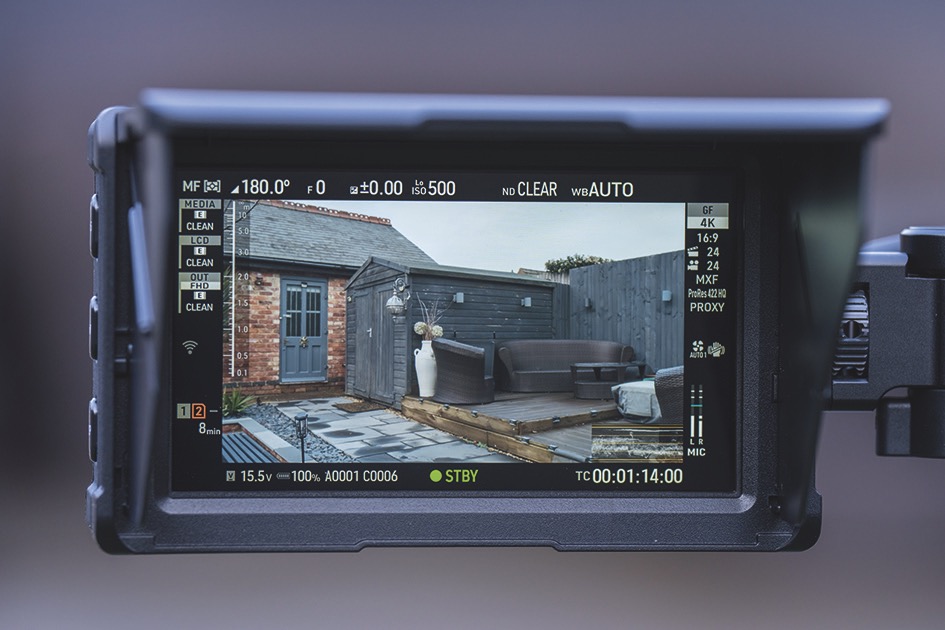
A handy switch on the camera body lets you choose between AF and MF, and the viewing tools are good to help you nail manual focus every time.
On the subject of run-and-gun doc work or gimbal use, one obvious omission is any in-body stabilisation. Fujifilm has chosen to lean on lens-based solutions, which is a sensible cinema decision in certain contexts, but it’s also a practical reality check for solo shooters.
If your style involves significant use of handheld walking shots, you’ll want lenses with strong OIS, a rig for inertia or a gimbal. The upside is a cleaner and more cinema-orientated internal architecture. The downside is you can’t expect any hybrid-camera-style forgiveness when the operator gets tired.

Fujifilm gets body conscious
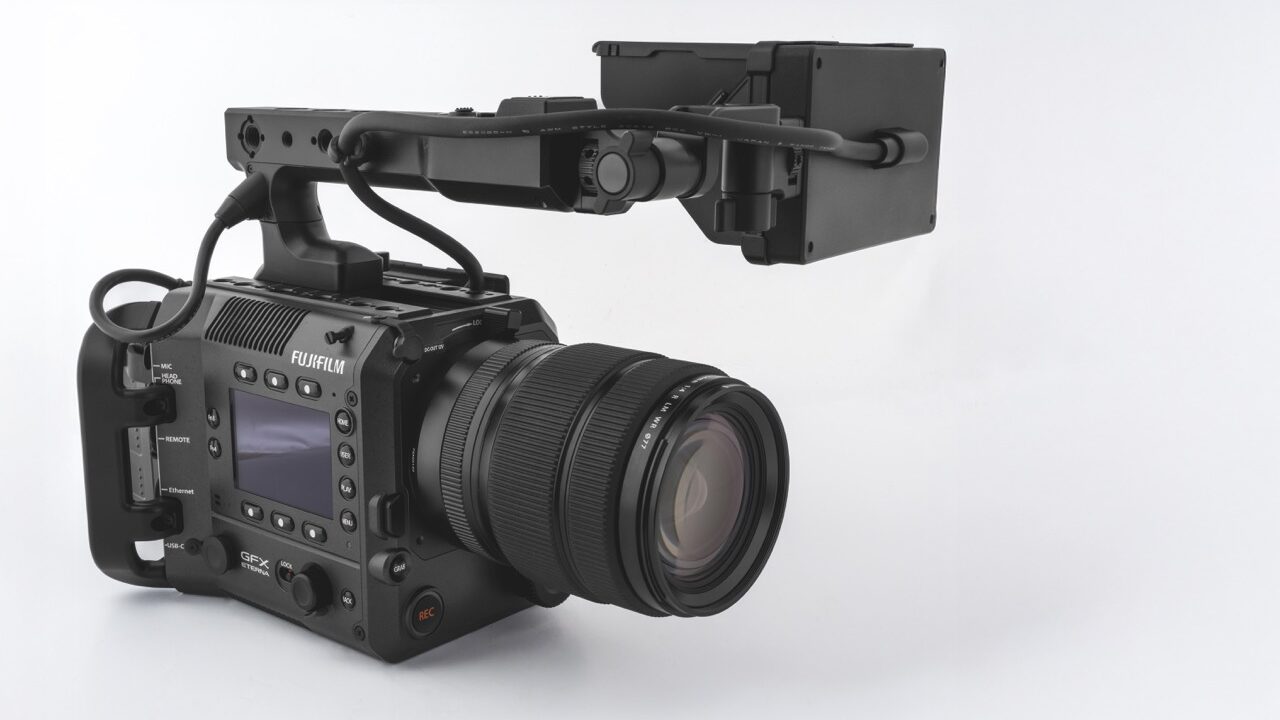
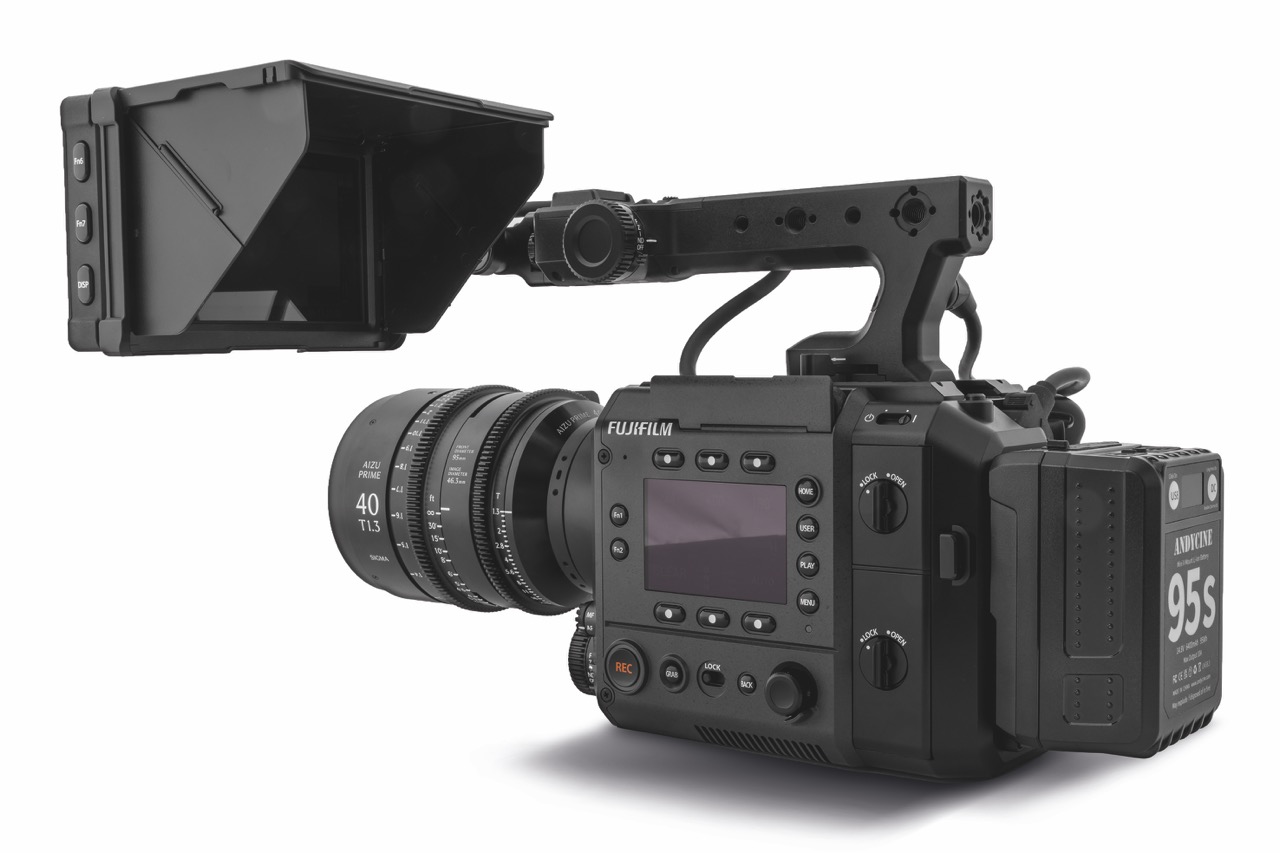
The Eterna is loaded with film-centric usability touches in design, controls and monitoring, as well as boasting a body that’s solidly built with high-end engineering fasteners.
A dedicated top handle has buttons and a multifunction control knob, and the camera comes with a five-inch HD LCD monitor rated at 2000 nits, plus a hood for glare control. There’s waveform, vectorscope and zebras, and function buttons on the monitor add to those on the camera.
Either side of the camera body are three-inch LCDs with contextual buttons and full menu and camera controls. And lockable menu access is useful for assistants or avoiding accidental changes.
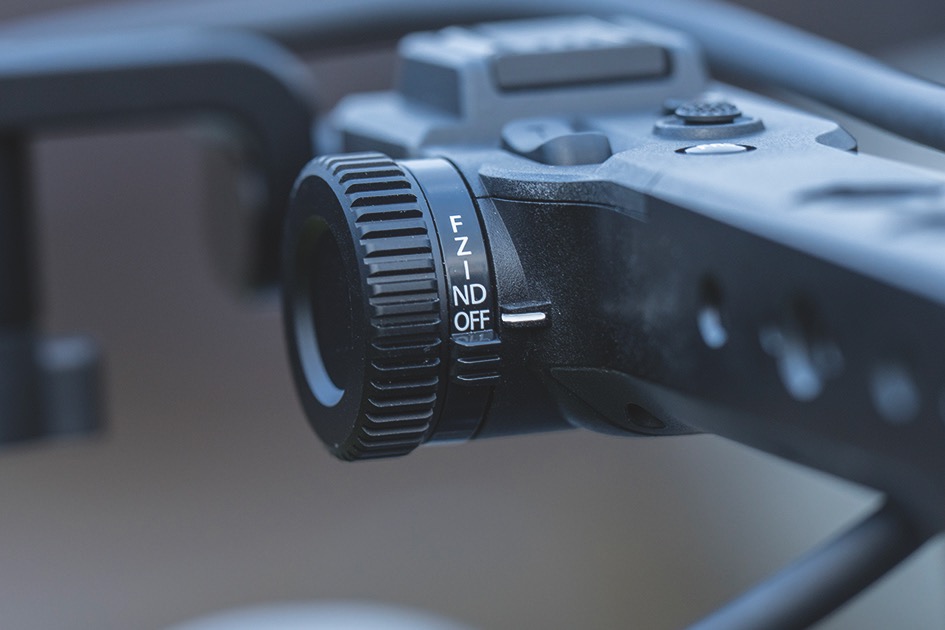
Fujifilm also prides itself on physical control logic aimed at operators. With a native GF lens mounted, you can set controls for focus, iris and zoom, and configure which parameters you want quick control over. That’s useful in run-and-gun configurations where you’re juggling multiple exposure decisions.
The Eterna uses a single CFexpress Type B card as the main recording medium, with room for an SD card for proxies, firmware updates and support tasks. You can also record to an external SSD via USB-C.
The camera houses Fujifilm’s small NP-W235 internally, which acts as a failsafe and can be charged by the external power source. On the internal battery alone, you can expect approximately 30 minutes depending on your use. In reality, this is designed around external power on-set, either plug-in via the included AC mains lead or via a V-Mount battery. The internal battery means you can hot-swap external sources or survive brief power interruptions without killing the take. This is your typical cinema camera philosophy and means the internal battery isn’t the main fuel tank, it’s the safety net.
Another nod to real-world cinematography is found in the Eterna’s modern networking and connectivity, with proper cine input/output options. The port selection is far more production-friendly than most hybrids as it has SDI and HDMI out, 3.5mm mic in and headphone out, 2.5mm remote record start/stop, timecode and genlock via BNC, a locking DC power input Lemo-style, USB-C for external SSD recording, RJ45 LAN plus Wi-Fi and Bluetooth.
But there are no XLR inputs. To use high-end XLR mics, you can plug an adapter directly into the top handle’s interface port. It’s a neat solution, but means more kit to buy and carry.

Who should consider the Eterna?
This camera makes perfect sense for any narrative filmmakers who want a large format look that offers a taller open gate canvas, or for productions mixing widescreen cinema delivery with vertical or other social media deliverables. If you want incredible Cinemascope work with anamorphic lenses in modern squeeze ratios, the Eterna is for you.
Crews who benefit from timecode, genlock, SDI and proper on-set I/O will love it, as will those who want Fujifilm’s signature rendering.
Who might be better served elsewhere are people who need internal Raw as a non-negotiable, handheld-heavy solo shooters who rely on strong IBIS and buyers who should really get a lighter hybrid-that-can-do-cinema rather than a cinema-first build. And if you own a bagful of matching lenses, it makes it much easier to make the change.

Lens choice gets wider
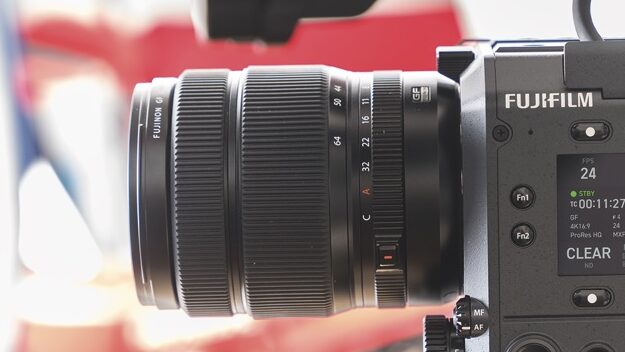
A massive sensor calls for a large bit of glass to fill it, and Fujifilm has a growing range of native lenses to fit the GFX Eterna 55, including the 32-64mm AF zoom we used in our test. As well as exotics like the 30mm f/5.6 T/S and 110mm f/5.6 T/S Macro, which are perspective correction lenses, there is a new GF 32-90mm T3.5 power zoom. This lens is purpose-built for filmmaking with image stabilisation and weather sealing.
But the addition of a PL adapter with every GFX Eterna 55 opens up a huge array of genuine cinema lenses – ranging from vintage glass to anamorphics and the very latest optics built for the new crop of large-sensor cameras.
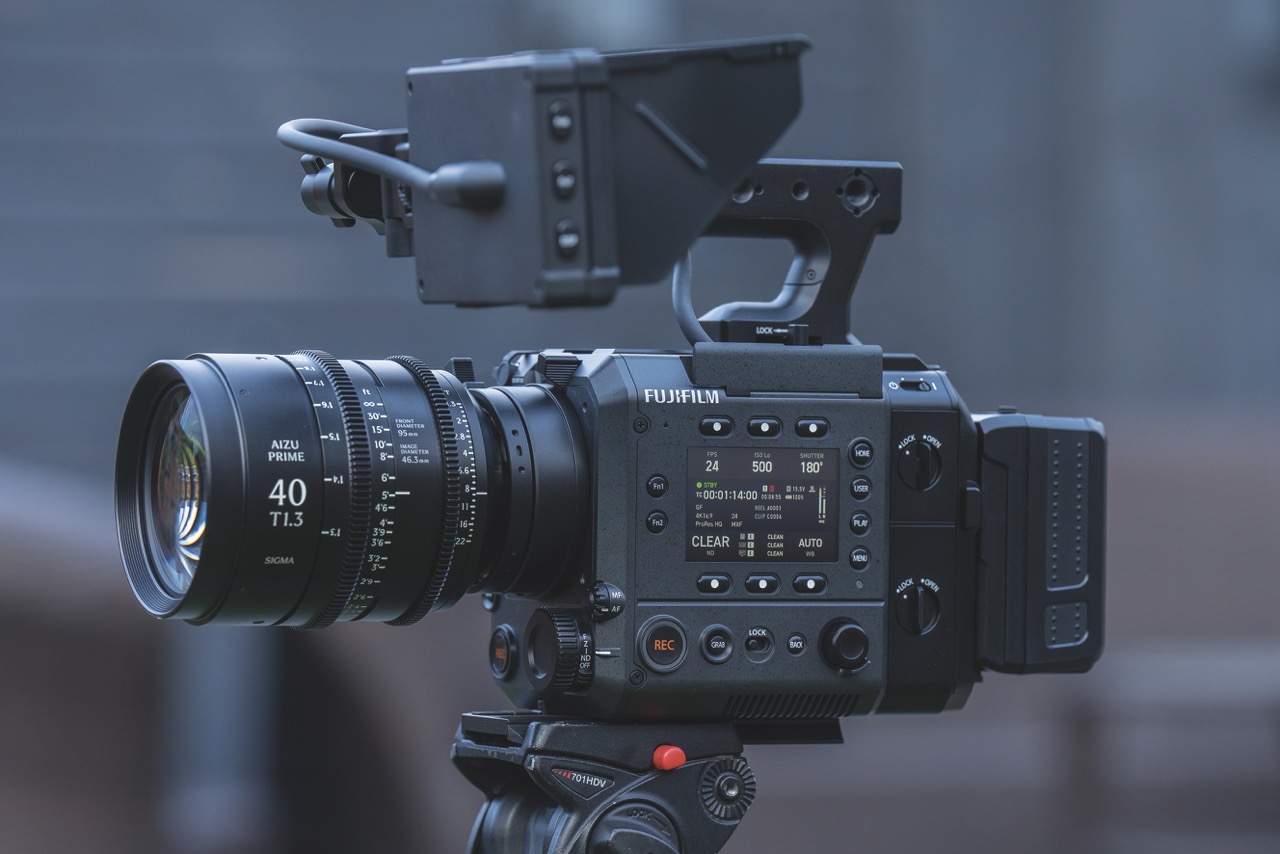
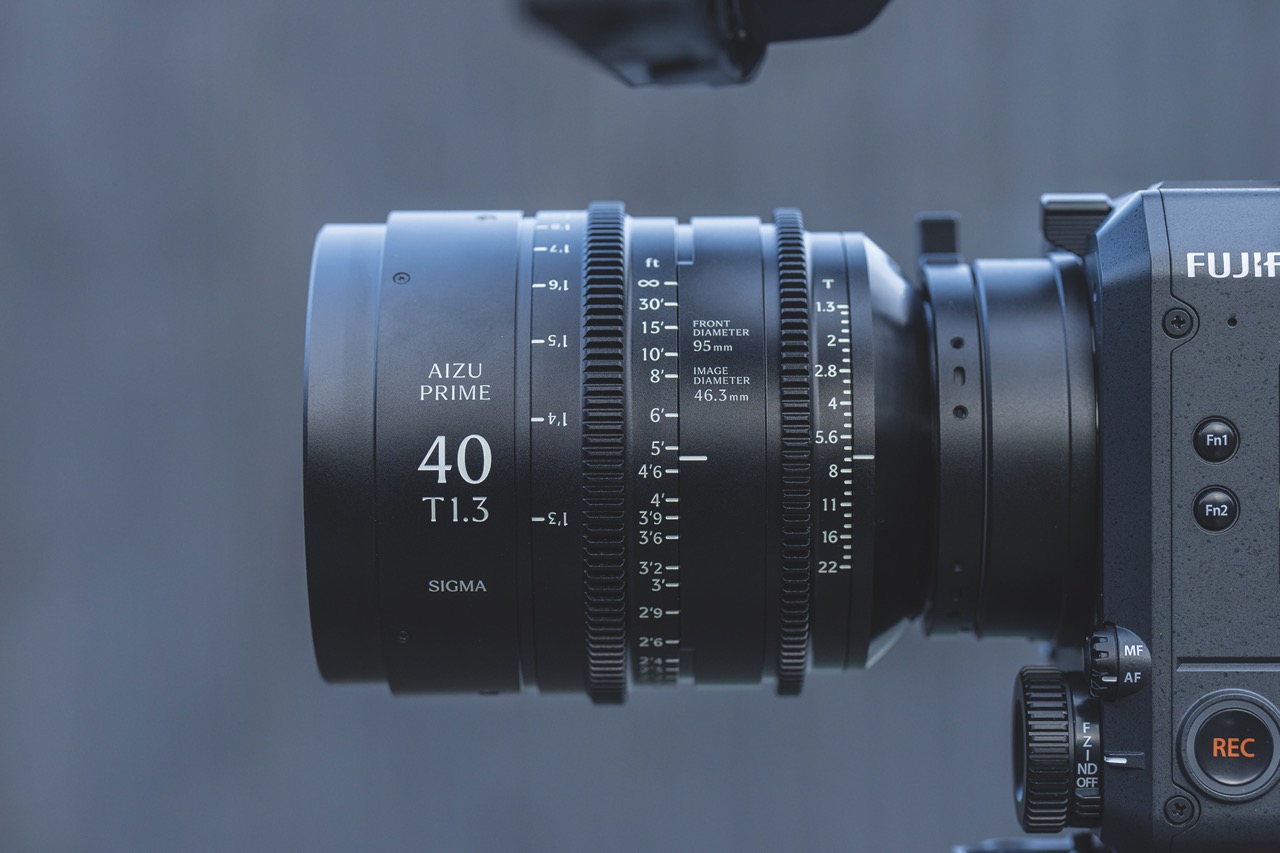
We managed to get hold of a brand-new Sigma 40mm T1.3 LF Aizu prime to try out on the GFX Eterna 55, and were hugely impressed. Compared to the f/4 zoom, the huge speed increase of the £6999/$8299 Aizu allowed for wafer-thin depth-of-field – something that called for the GFX’s internal NDs to cut enough light down.
Featuring a Zeiss eXtended Data port, the 40mm lens had no breathing issues and was distortion-free, producing a sharp yet still organic look that suits cinema-style shooting beautifully.
Focusing as close at 38cm/15in, you can get in close yet still create a wonderfully soft, shallow depth-of-field thanks to the T1.3 aperture. And, of course, it’s great for low light. It’s built to last with superb materials and engineering, and will be a stunning new flagship for the Sigma cine range.
The verdict
The Fujifilm GFX Eterna 55 is bold because it’s not trying to be the same camera everyone else is making. Its tall large format sensor, open gate flexibility and anamorphic friendliness create genuine creative options that don’t exist on most mainstream cinema camera bodies. Pair that with serious I/O options, internal variable ND, strong monitoring and Fujifilm’s colour pedigree, and you have a camera that feels designed to fit around the realities of modern production.
The frustration is – at this price – the lack of internal Raw, which will raise eyebrows. But if your priority is the format and the look, and you are searching for a cinematic tool that will encourage different framing decisions rather than just different menu options, the Eterna 55 is one of the most distinctive cameras to hit the market in years.
How it rates
Features: 8
Lots of codecs but no internal Raw, XLR inputs or IBIS
Performance: 9
The footage is stunning with an organic feel
Handling: 9
It’s a well-thought-out cinema camera package
Value for money: 8
Accessible relative to the large format, 65mm world
Overall rating: 9/10
A stunning large format camera for unique footage
- Pros: Large-sensor filmmaking, good AF
- Cons: No internal Raw or IBIS
This review was first published in the March/April 2026 issue of Pro Moviemaker