Mini test: DJI RS 5 Combo Kit
Posted on Mar 4, 2026 by Pro Moviemaker
Our hands-on test of the DJI RS 5 shows a gimbal that combines precise stabilisation, advanced tracking and flexible, filmmaker-friendly operation
Words Adam Duckworth
There was a time when every different generation of technical device – from smartphones to digital cameras – would offer major leaps forward in technology. But in recent times, they have become small steps. Motorised, three-axis gimbals are in this race of incremental gains.
A gimbal from five years ago is still a decent workhorse, while the current DJI RS 4 and RS 4 Pro continue to set the standard for high-end gimbals. Meanwhile, 2025’s pint-sized RS 4 Mini offered new ideas – pioneering hands-free subject tracking, enabled by a clip-on module right next to the camera – but flew under the radar due to a limited payload.
Now this technology has come to the RS 5 in a much more advanced way: a pro model which has a higher payload. It does not just improve your workflow, but fundamentally changes production expectations.
DJI’s RS 5 stabilises your camera and actively helps you confidently frame, track and shoot in previously awkward situations.
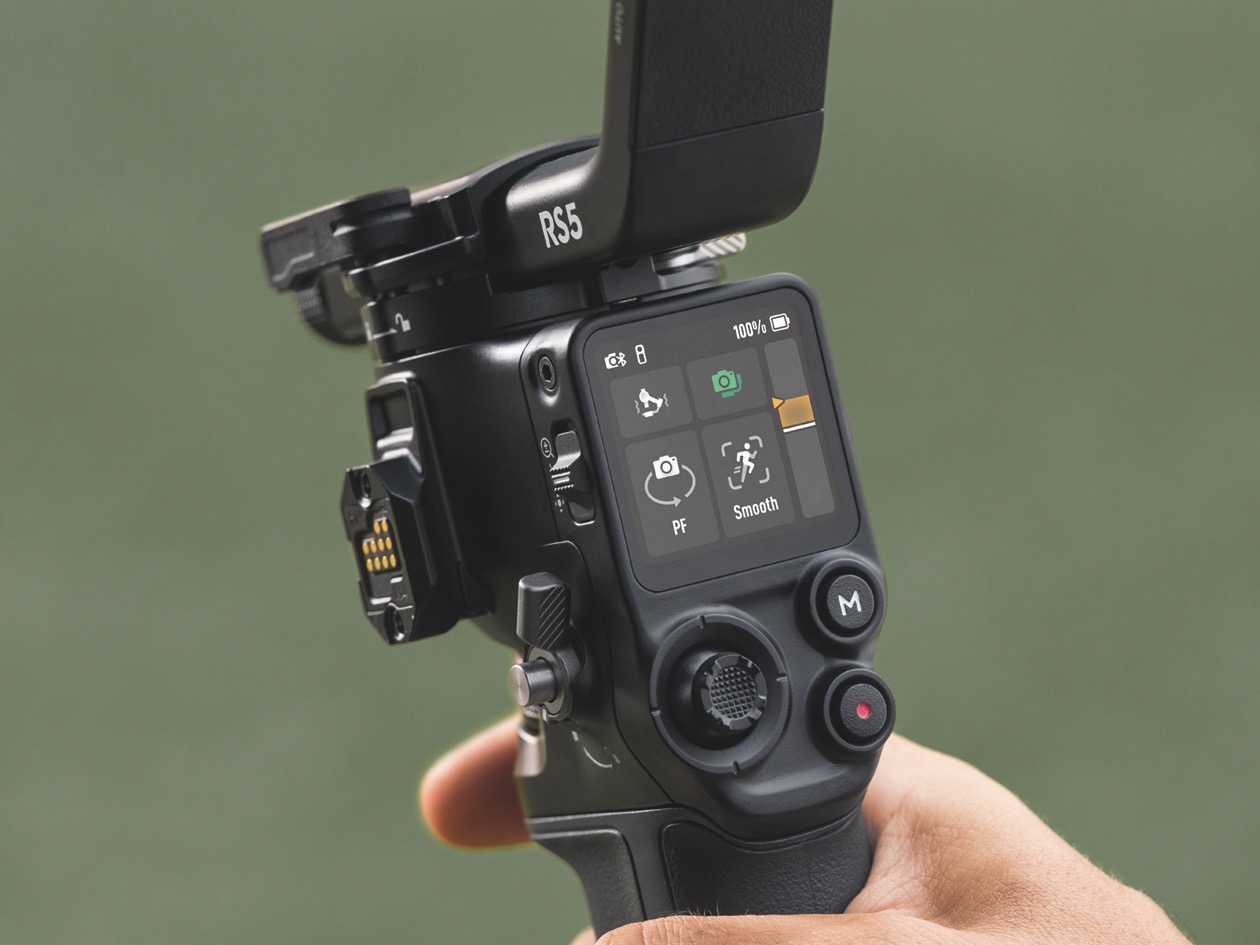
As on the RS 4 Mini, the Intelligent Tracking Module turns the gimbal’s upgraded 1.8-inch touchscreen into something far more powerful than a simple control interface. It becomes a live video monitor, displaying what the tracking module sees and by extension what the camera mounted on the gimbal sees. With a single tap, you can select a subject to track and the RS 5 will lock onto it and keep it framed wherever the gimbal goes. For solo filmmakers, it changes what’s realistically achievable.
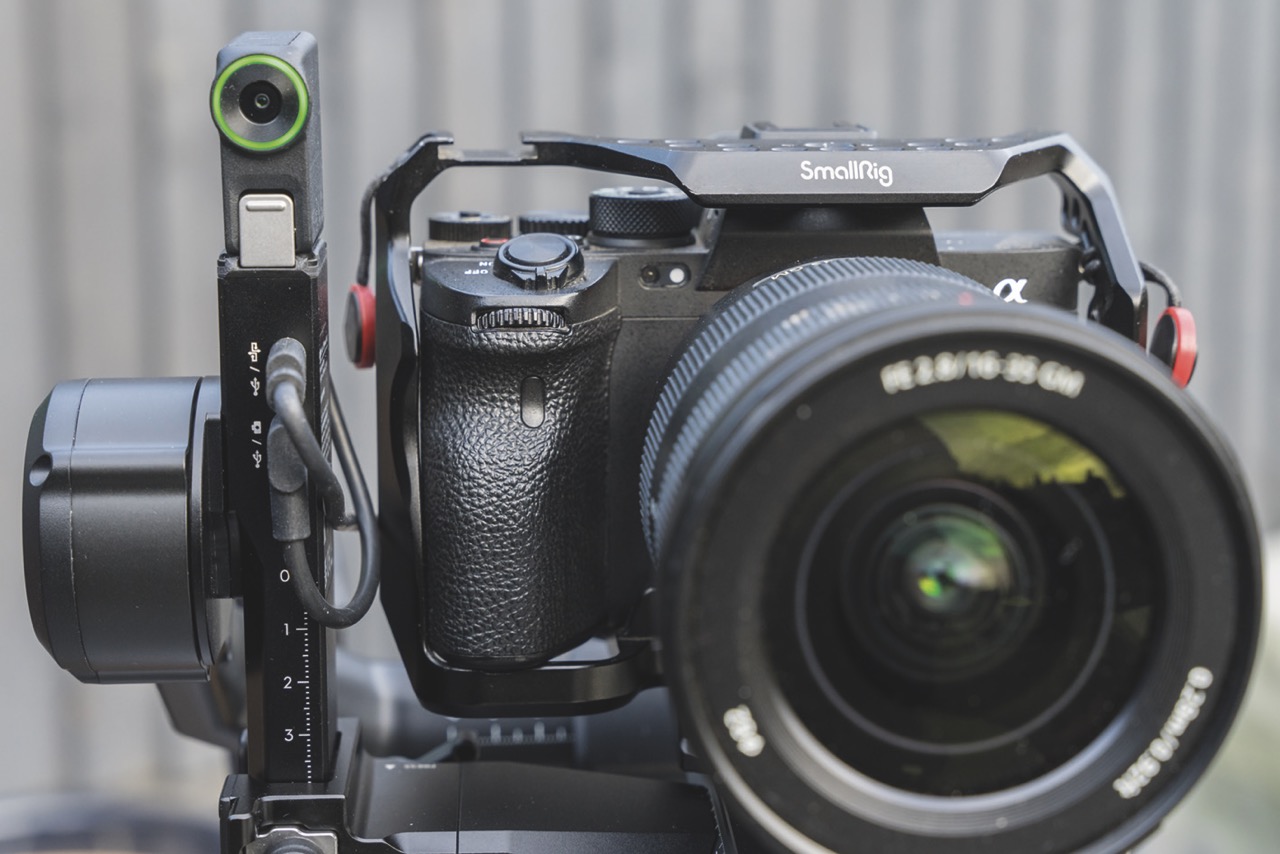
The tracking system is intuitive. Swipe left on the gimbal’s touchscreen to activate the video input, use the camera’s own monitor to frame your subject and initiate tracking with a simple hand gesture or tap. From there, the RS 5 keeps the subject locked in frame even at distances of up to ten metres in relatively low light.
Also impressive is how flexible the system is. You are not locked into centre-frame compositions as you can reposition your subject and the gimbal will maintain that framing while the subject moves. Responsiveness can be adjusted too.
Tracking isn’t limited to people any more. Vehicles, pets and even unusual objects can be selected by just drawing a box around them on the screen. And the RS 5 proved surprisingly adept at holding onto non-standard subjects, even when they moved unpredictably.
So, when shooting, you don’t need to be glued to the camera screen. You can set the framing, tap the subject and be free to move safely without constantly checking your monitor. You can attend to a second camera on a tripod, for example, when shooting talking heads who may move around a bit. That’s a genuine efficiency boost. And if you are used to walking backwards while talent walks towards you, you can now walk forwards and hold the camera behind you or to your side. If running alongside a subject, you can keep your focus on where you are going, instead of always trying to look at the screen to make sure the talent is still in the frame.
All it takes is a supplied USB-C cable from your camera to the gimbal, another from the Tracking Module to the gimbal and linking up your camera with Bluetooth. It’s easy to check via the comprehensive DJI app.
Other improvements join this leap forward, such as fifth-generation stabilisation that is smoother than ever. Footage is among the smoothest achievable from a handheld gimbal in this weight class. Whether tracking a subject at walking pace or moving quickly alongside action, the DJI RS 5 maintains a level of stability that is simply incredible.
Fast-moving subjects really show what the RS 5 is capable of. Even when the operator is moving at speed, the gimbal remains composed, ironing out footstep-induced bounce or micro-jitters with very impressive consistency. It’s performance that reduces the need for post-production stabilisation and gives footage a more natural feel straight out of camera.
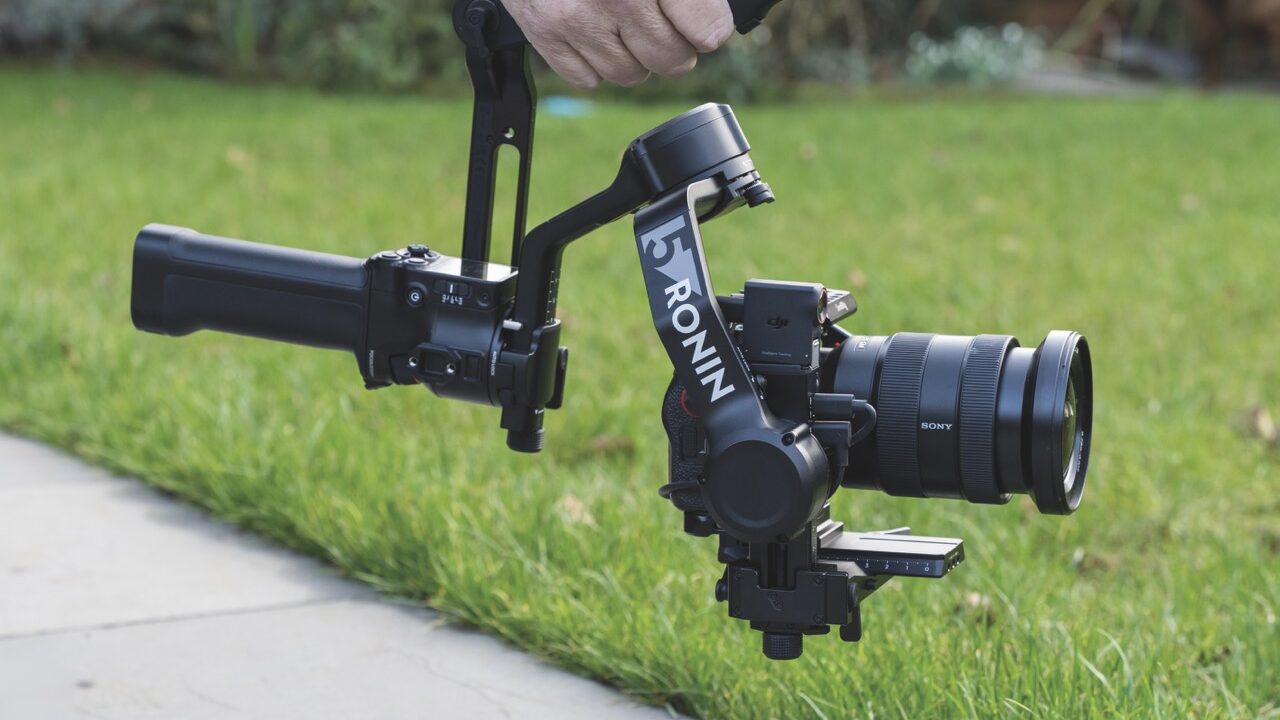
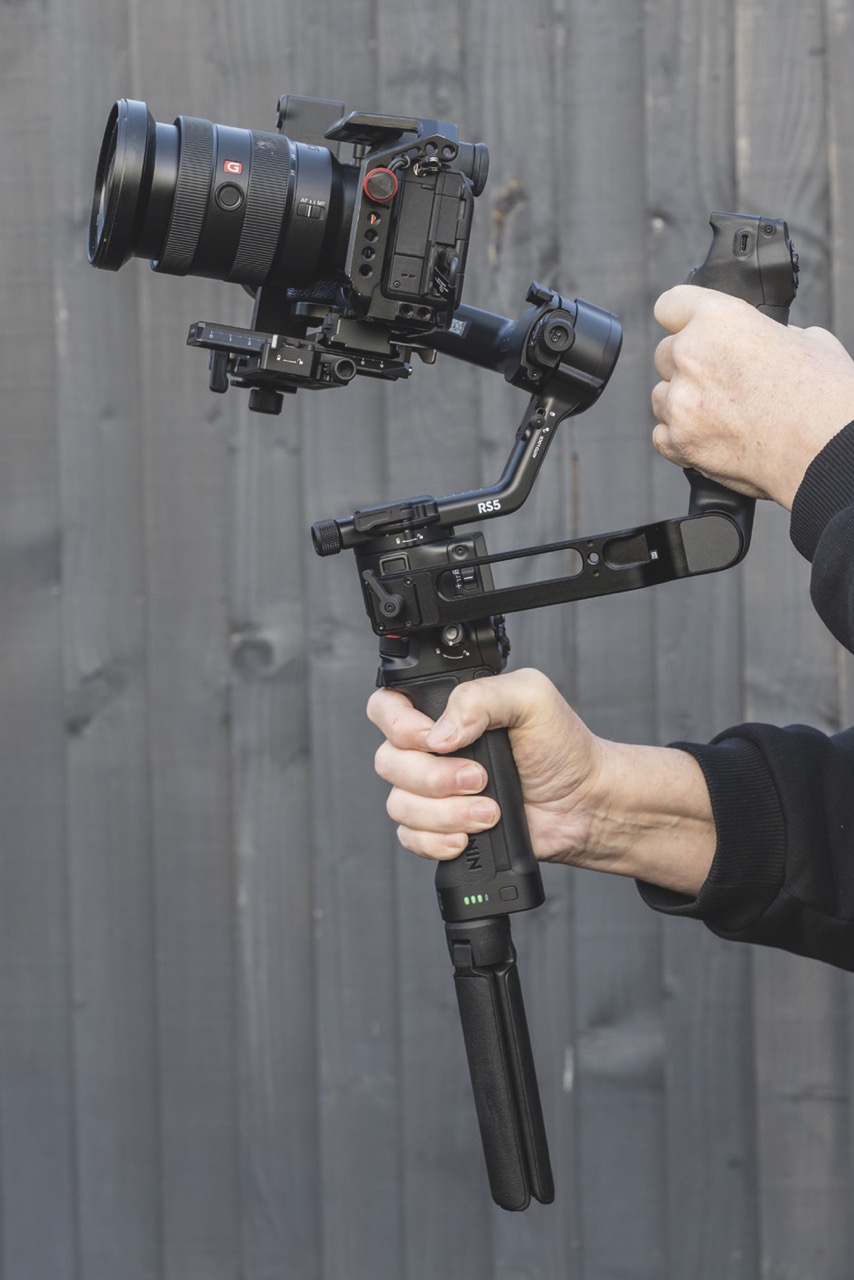
One of the standout accessories for the RS 5 is the new electronic briefcase handle, which connects via the Nato/ RSA communication port on the side of the gimbal. Not just a grip, it expands how the RS 5 can be operated.
The handle has mode and record buttons, a second joystick and even a trigger for recentring the gimbal or entering selfie mode. It allows left- or right-handed operation and is perfect for low-slung shots where traditional gimbal operation becomes awkward.
A welcome new feature to help you achieve as smooth footage as possible is the Z-axis indicator built into the larger touchscreen. Of course, the Z axis of up-and-down movement is not stabilised so you always need to walk with care. With this axis now monitored, there is a simple green, amber and red system that provides real-time feedback on how much stress you are putting on the gimbal motors and therefore how steady your movement is. Adjust your movement, earn a green indicator and footage will improve immediately.
The RS 5 has a coldshoe mount for attaching accessories such as external monitors, so it feels at home in small studio set-ups as well as on location. Combined with the Tracking Module, this turns the gimbal into a flexible camera platform rather than a single-purpose stabiliser.
Inside, the RS 5’s bigger battery grip is a new standard battery that charges in just one hour and delivers up to 14 hours of runtime – a serious upgrade over the RS 4, offering 60% faster charging and around two extra hours of operation. This means you can realistically get through a full 12-hour shoot day without worrying about power. Even if you do need to top up, a quick charge over lunch is enough. No other gimbal in this class currently offers this combination of fast charging and extended runtime.
Balancing has long been one of the most frustrating aspects of gimbal use, particularly with heavier cameras. DJI made big strides with the RS 4 by introducing Teflon-coated axis arms that reduce friction during adjustments. The RS 5 now goes even further, as fine-tuning knobs are used on every axis arm. The result is faster, smoother and far more precise balancing, even with payloads of up to 3kg/6.6lb. Finding the sweet spot takes a fraction of the time compared to previous RS models, and the auto-locking axes make set-up and teardown near effortless.
Native vertical shooting comes as standard, requiring only a quick reattachment and rebalance. This is a practical, time-saving feature.
It is typical of this new gimbal that DJI has ironed out pretty much every complaint filmmakers usually have. DJI has gone a long way to solving issues and innovating with new tech. The stabilisation is exceptional, the tracking module is amazing and the improvements to ergonomics, balancing and battery life make it a joy to use in day-to-day production. Combined with rock-solid Bluetooth camera control and a system that simply works every time you power it on, the RS 5 feels mature, refined and remarkably complete.
Specifications
- Axes: Three stabilised with Z-axis vertical indicator
- Load capacity: 3kg/6.6lb
- Battery: 2150mAh
- Runtime: 14 hours
- Charging time: 1 hour
- Display: Full-colour, fixed touchscreen OLED
- Axis locks: Auto
- Modes: Pan-Follow, Pan-and-Tilt Follow, FPV, 3D Roll 360, Custom mode, Active Track
- Connectivity: 2GHz RF, Bluetooth 5.1, 2x USB-C, Android and iOS app
- Accessory mounts: 1/4in-20 mount, coldshoe, RSA/Nato ports
- Dimensions: 247.4×115.7×258.7mm/ 16.5×8.8×7.65in folded, excluding camera, grip and tripod
- Weight: 1.2kg/2.63lb
Pro Moviemaker rating: 10/10
Auto tracking and more power makes this a total winner
- Pros: Incredible spec in an affordable pro gimbal
- Cons: Not for super-heavy payloads
This review was first published in the March/April 2026 issue of Pro Moviemaker