Mini test: Tascam FR-AV4
Posted on Dec 9, 2025 by Pro Moviemaker
We put Tascam’s FR-AV4 through its paces – a four-channel recorder that brings pro audio tools to a camera-friendly unit
Words Adam Duckworth
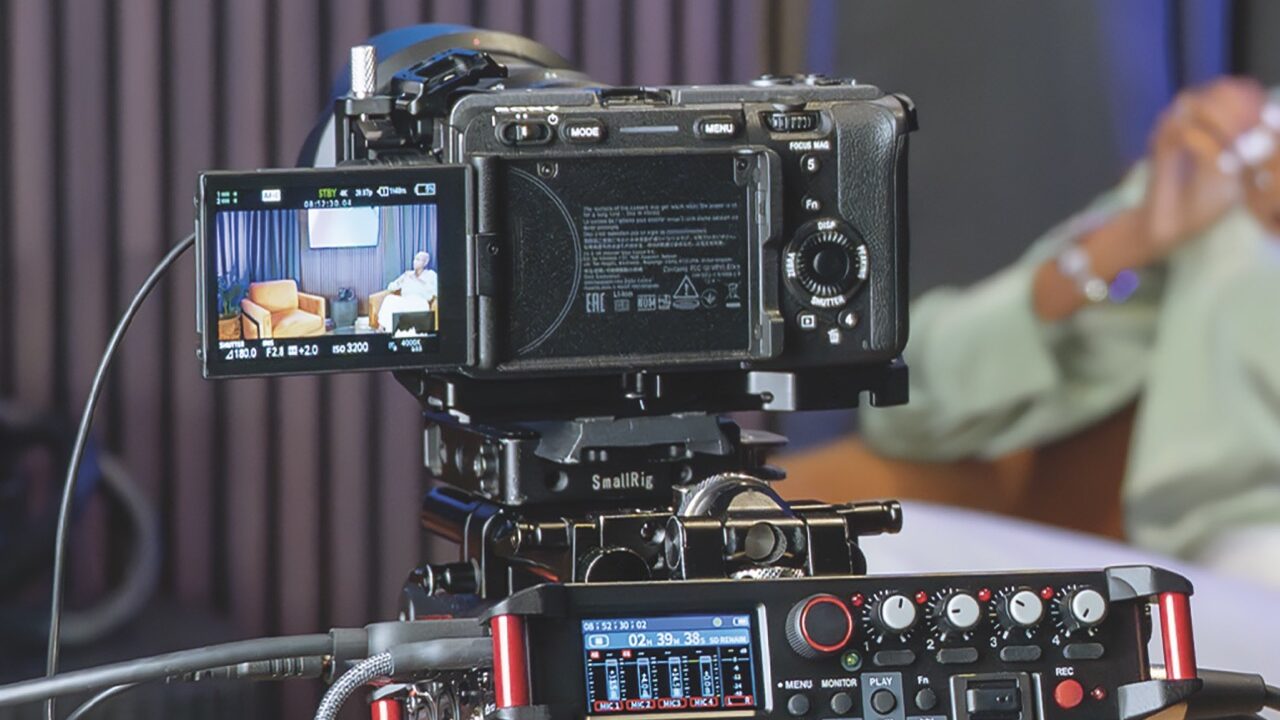
For users of DSLR or mirrorless cameras without XLR inputs and advanced audio controls, Tascam delivers another affordable, reliable tool with the FR-AV4, a lightweight, four-channel field recorder and mixer that punches above it’s size. As well as its four XLR combo jacks to use with pro kit, its packed with features like 32-bit float recording, timecode generation and HDMI sync.
Unlike Tascam’s award-winning Portacapture X8 recorder, the FR-AV4 doesn’t have its own mics, but the X8’s mics are plug-in units that only look integrated. The FR-AV4, meanwhile, is small enough to sit under a mirrorless or cinema camera but sturdy enough to take daily use.
Four Ultra HDDA mic preamps feed four XLR/TRS combo inputs, and the internal four-in/two-out mixer enables six-track recording – four mono inputs plus a stereo mix.
That 32-bit float capability, backed by dual analogue-to-digital converters, means you can almost forget about adjusting gain. You’re able to record whisper-level dialogue and sudden peaks in one take without clipping, ideal for situations where resetting levels isn’t an option.
The FR-AV4’s smart integration with camera systems makes it shine. The built-in timecode generator supports jam sync, while the HDMI I/O can handle record triggers and clock synchronisation, as well as 4K/ 8K video pass-through. So it’s easy to keep everything locked and aligned between multiple cameras.
For larger set-ups, multiple FR-AV4 units can be cascaded via HDMI, extending the number of recording channels without introducing sync headaches. There’s even support for external recorders like Atomos or Blackmagic Design, so it can fit any modern production environment.
The unit doubles as a six-in/two-out USB-C audio interface, supporting both 24-bit and 32-bit float formats for recording or livestreaming at home, on-set, in a studio or the field.
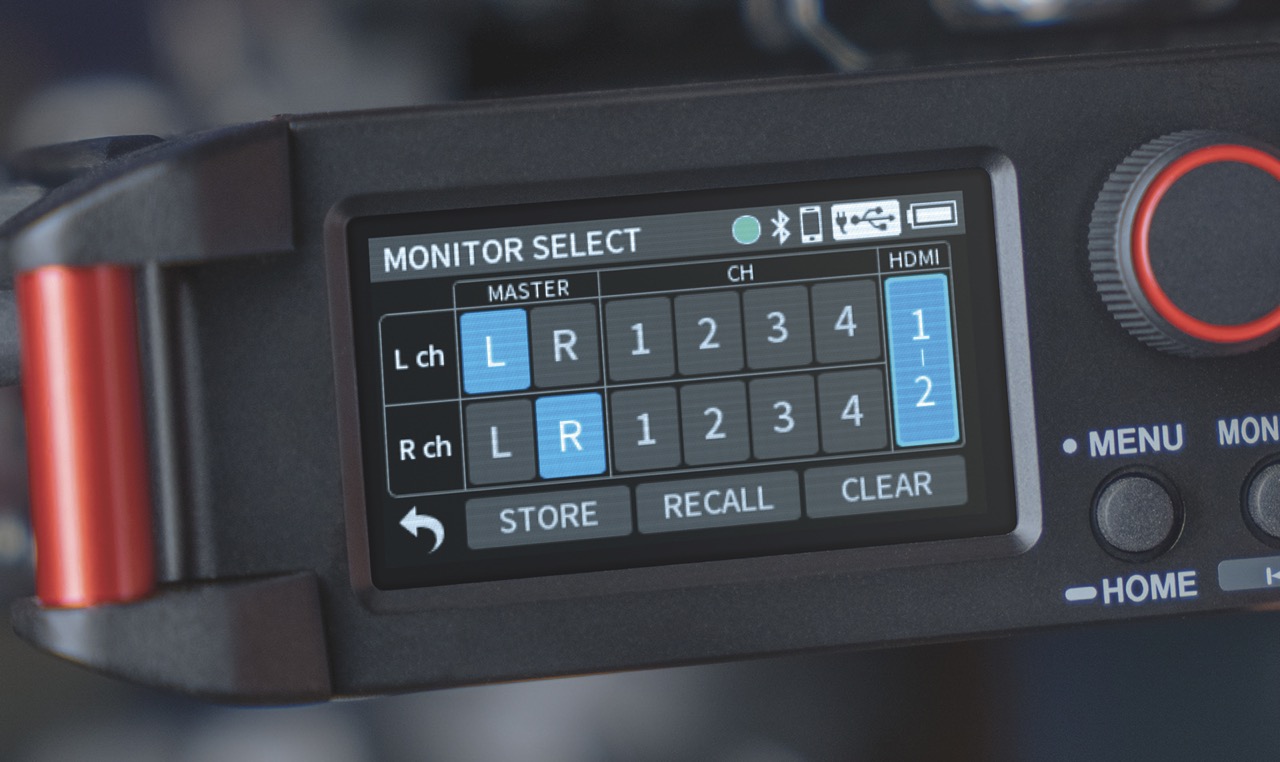
The 1.9-inch colour touchscreen and tactile jog wheel make menu navigation intuitive, while the optional AK-BT2 Bluetooth adapter opens up control via the Tascam Recorder Connect app for iOS and Android. The app lets you wirelessly control and monitor up to five Tascam devices, and a £51/$69 adapter supports Bluetooth audio monitoring.
Even the most fussy audiophile wouldn’t be disappointed with the polished audio that the onboard EQ, limiter, low-cut filter and noise gate processing enables the FR-AV4 to deliver in post.
Power options are four AA batteries, a USB mobile power bank or a mains adapter. Storage is via SD cards of up to 512GB and mounting is straightforward thanks to 1/4in-20 threaded holes.
The Tascam FR-AV4 combines compactness and capability, offering 32-bit float without the complexity or bulk of a full-size mixer-recorder. If you want to travel light without compromising on audio quality, this is the sound investment for you.
Specifications
- Input/output: 6 channels, 5 inputs plus stereo mix. 4x combo XLR/ 1/4in 3-pin inputs, 1x 3.5mm stereo line input, camera/ line output, headphone, USB-C (6 in, 2 out). Bluetooth with optional adapter
- Max sample rate/resolution: 192kHz/ 32-bit float
- Audio formats: Ambisonics A, Ambisonics B (FuMa/AmbiX), BWF, WAV, MP3
- Bit rates: 128-320Kbps
- Signal processing: Delay, EQ, limiter, low-cut filter
- Timecode: Yes, with support for 23.98/29.97/30p with HDMI, USB and TC sync
- Phantom power: 48V
- Frequency response: 20Hz-60kHz
- A/D converter: Dual
- Dynamic range: 133dB
- Mixer: Integrated to mix 4 inputs to 2 outputs
- Built-in speaker: No
- Display: 48.2mm/1.9in colour LCD touchscreen
- Memory card: SD up to 512GB
- Power: 4x AA batteries, USB-C, DC via optional adapter
- Dimensions (wxhxd): 184x42x130mm/7.2×1.7×5.1in
- Weight: 756g/1.7lb with batteries
Pro Moviemaker rating: 9/10
A compact four-channel mixer-recorder with XLR inputs
- Pros: 32-bit float recording, timecode
- Cons: Bluetooth dongle costs extra
This review was first published in the November/December 2025 issue of Pro Moviemaker