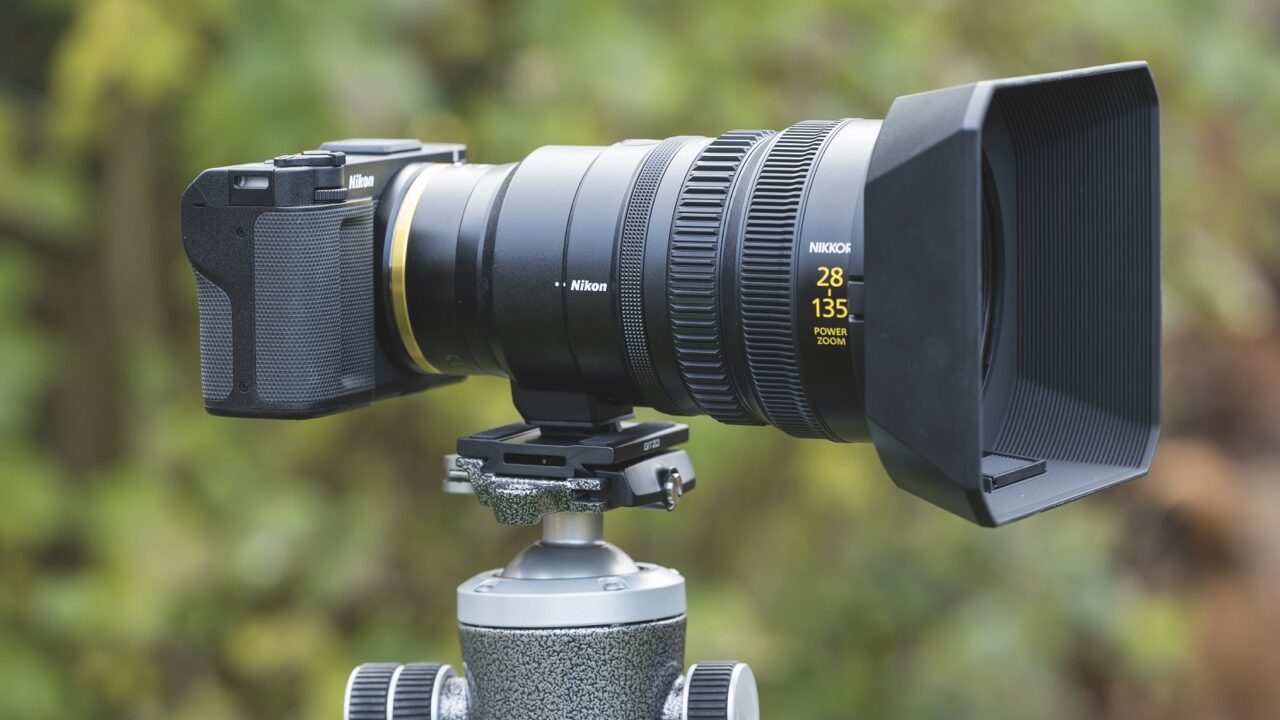
Big review: Nikon ZR
Posted on Jan 30, 2026 by Pro Moviemaker
Red zed redemption
Nikon relies upon Red’s know-how to make its first cine camera, the spec-tacular ZR
Words Adam Duckworth
It’s been a long time since the launch of a camera sent waves around the filmmaking world at all levels. That’s precisely what’s happened now that Nikon has revealed its first Z Cinema model.
Even though it’s a prosumer-level camera with the sensor of an existing mirrorless model from Nikon’s range, the ZR has got everyone talking due to its low price, shockingly high spec and the magic name Red.
It’s Nikon’s first camera made in collaboration with subsidiary company Red, whose talented engineers have reworked the 24.5-megapixel, semi-stacked full-frame sensor of the Nikon Z 6III for dual base ISOs of 800 and 6400, as well as increasing the dynamic range to a claimed 15+ stops.
Best of all, the camera can record three different internal Raw codecs including Red’s new R3D NE.
Content creators have swooned over the huge four-inch touchscreen and advanced AF, while professional filmmakers are amazed at the 32-bit float internal audio and wide choice of Raw files. High-end filmmakers are falling over themselves at the chance to own an affordable B camera that could match the Red Raw files from their V-Raptors. As its first attempt at making a cinema camera – with the promise of more high-end versions to follow – Nikon has made its rivals go green over Red.
While some manufacturers try to lock you into their own Raw formats or enforce external Raw recording to a suitable device like an Atomos, Nikon offers internal 12-bit R3D NE Raw, Apple ProRes Raw and Nikon NRAW formats, as well as 10-bit ProRes or eight-bit H.264/H.265 files, to save space and time in post. Internal Raw goes up to 6K in 60p, 4K in 120p – although there is a significant 1.5x crop – and Full HD up to 240p.
The ZR’s body weighs just 540g/1.19lb and is fully weather sealed. Costing £2199/$2197, it’s the lightest all-in-one full-frame cinema camera built with cinema-grade features in a highly portable format.
If you’ve read this far and are bowled over by the specs, however, hold fire before you flash the plastic and order one. Yes, the ZR is compact and offers amazing spec, but there are certain handling and workflow issues that potential purchasers should understand. You can’t have it all in a camera this small and affordable so there are some compromises.
The biggest is around handling and ergonomics. The ZR’s size is immediately noticeable. With a shell that blends Nikon’s mirrorless ergonomics with a cinema camera’s sensibility, it feels comfortable for run-and-gun, gimbal, drone or indie narrative use. The articulating four-inch, 1000-nit touchscreen is large, bright and usable even in bright daylight. Big tick for all these things. But, because the body is so pared-down, Nikon has emphasised that the ZR is designed to be used on its own without bolt-ons. If you want to add a cage, top handle, rig or monitor mount, there are no attachment holes like on rival models from Sony or Canon, just a single tripod thread that doesn’t feature anti-twist pins.
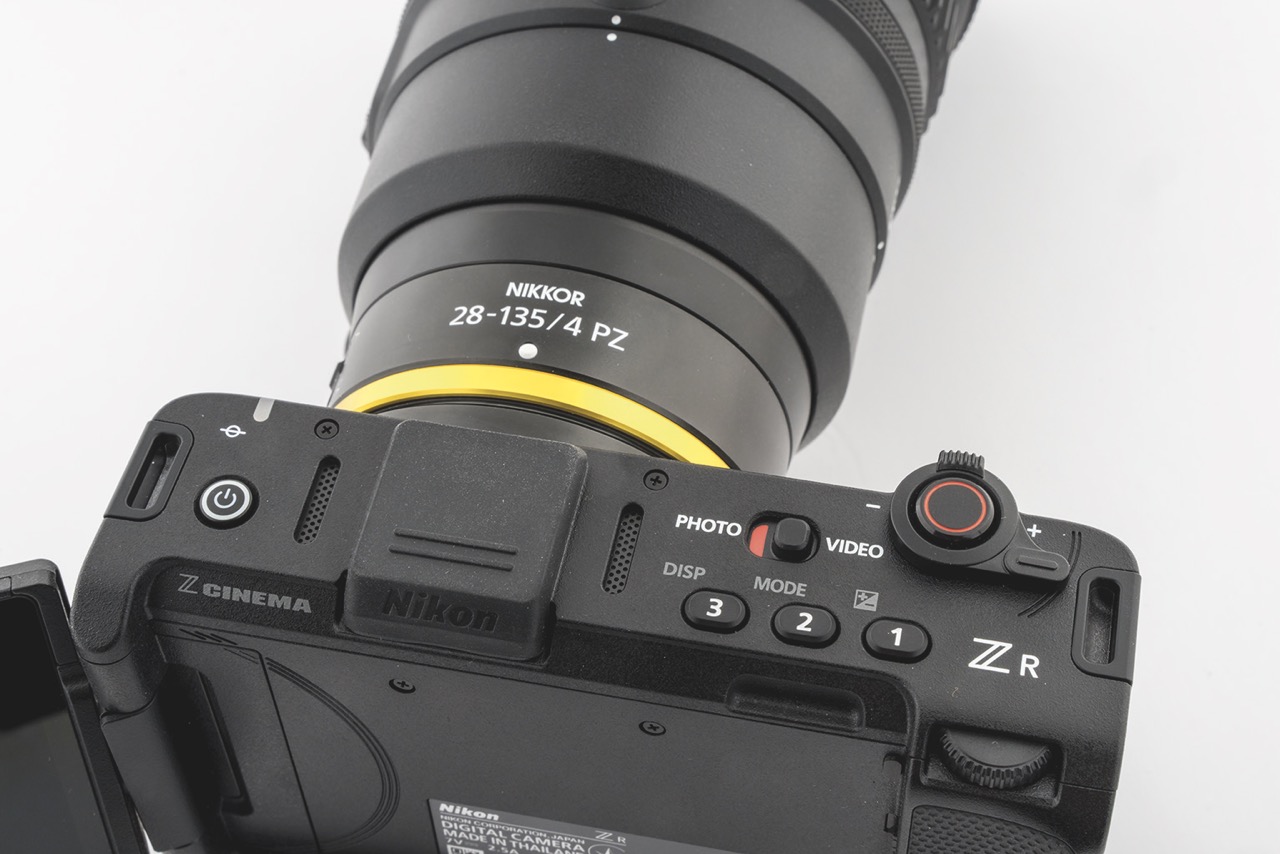
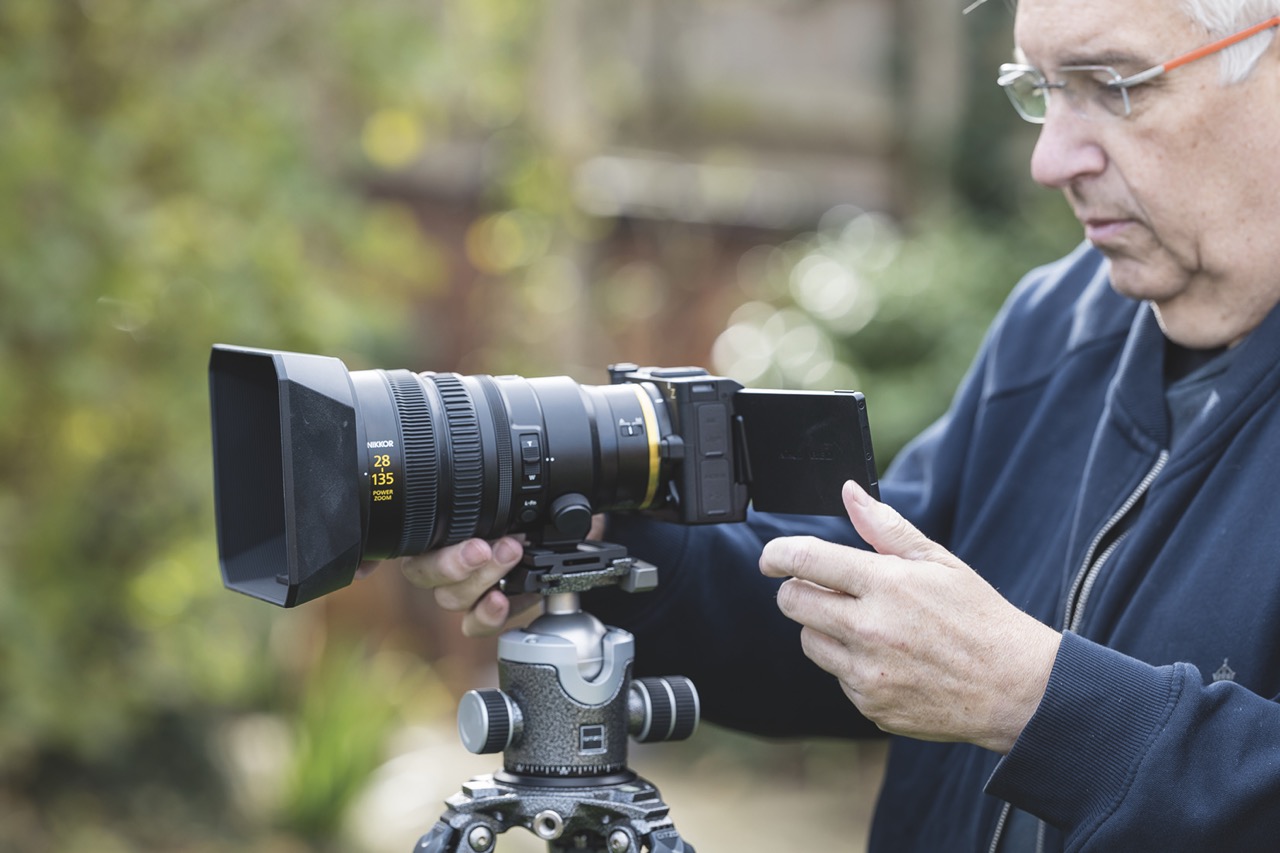
The full-size HDMI of the donor Nikon Z 6III has been downgraded to a micro HDMI, an odd choice for a cinema-focused camera. And to keep the body as slim as possible, the Nikon battery has been turned sideways and positioned so its access door is where the two card slots are: on the bottom plate. One is CFexpress Type B, the other is micro SD. The reality is that the micro SD is not up to recording any high-end video formats, so it’s really a single-card camera for video. You have to open the bottom door to change the memory cards or battery, which is a pain if the camera is on a tripod or rigged up in any way.
While the rear screen is massive and the best we’ve seen on a camera this size, in order to make room for it the controls and custom buttons have been significantly slimmed down, including the rear mini joystick.
While the camera offers great filmmaking features like a tally light, waveform monitoring and the ability to set shutter angle rather than speed, the implementation of some settings isn’t perfect. After setting shutter angle, it would be good to be able to change ISO quickly with the control dial, but that process is involved, requiring menu digging and custom buttons, of which there aren’t many. At least the menus are intuitive.
Another problem is that, while you can custom-load LUTs, these only seem to work on Red Raw files rather than NRAW or ProRes Raw files.
Some of these gripes could be tweaked by firmware, but others are a natural byproduct of squeezing a huge screen into a tiny, lightweight camera.
Audio, however, is one area where the ZR truly shines. It is the very first cinema camera to support internal 32-bit float audio with built-in mics, plug-in 3.5mm mics and through the digital hotshoe.
The theory behind 32-bit float is that you can record audio without clipping and simply tweak the levels in post. This is a massive advantage for interview, run-and-gun and hybrid creators, helping minimise sudden noises such as when speakers start to shout or whisper – and it works. It’s a thing of wonder to hear in action. One day all cameras will have this.
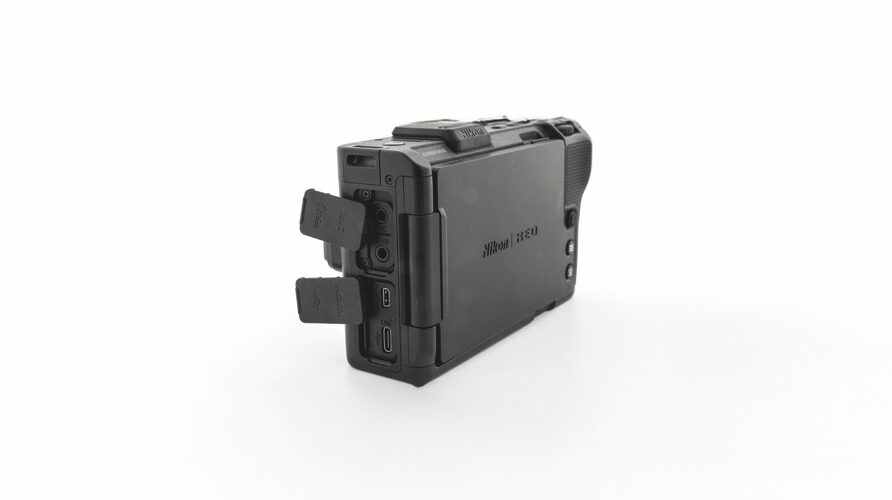
The new digital hotshoe accepts both Nikon’s ME-D10 digital shotgun mic and the Tascam adapter, which allows you to plug in XLR mics.
As a clever nod to vloggers, the ZR has advanced built-in mics that can record different sound patterns from around the camera. Content creators will like it, although external mics are the way to go for more serious audio.
The ZR offers five-axis in-body image stabilisation. It’s decent but not as good as rival options. It’s very good at mimicking a tripod shot when handheld, but add in walking or some other movement and it’s not the best.
What is excellent is Nikon’s subject detection AF, especially in planned shots of chaotic handheld sport. You can set a subject – people, animals, birds, vehicles or planes – or leave it to auto and the camera does a pretty good job of working it out itself.
The AF is also fantastic at shooting stills, as it has the same spec as the Z 6III but without the stills-focused ergonomics or any viewfinder.
Both Nikon and Canon claim that filmmakers and content creators do not use an EVF any more. Meanwhile Sony has just gone the other way and, for the first time, fitted an EVF to its Cinema Line newbie FX2, while the older FX3 and FX30 don’t have one.
But really, this camera is all about shooting incredible video, in the very highest Raw quality that still allows for maximum flexibility in post. And it delivers – with fantastic colours, great skin tones, wide dynamic range and Red’s namesake colour science.
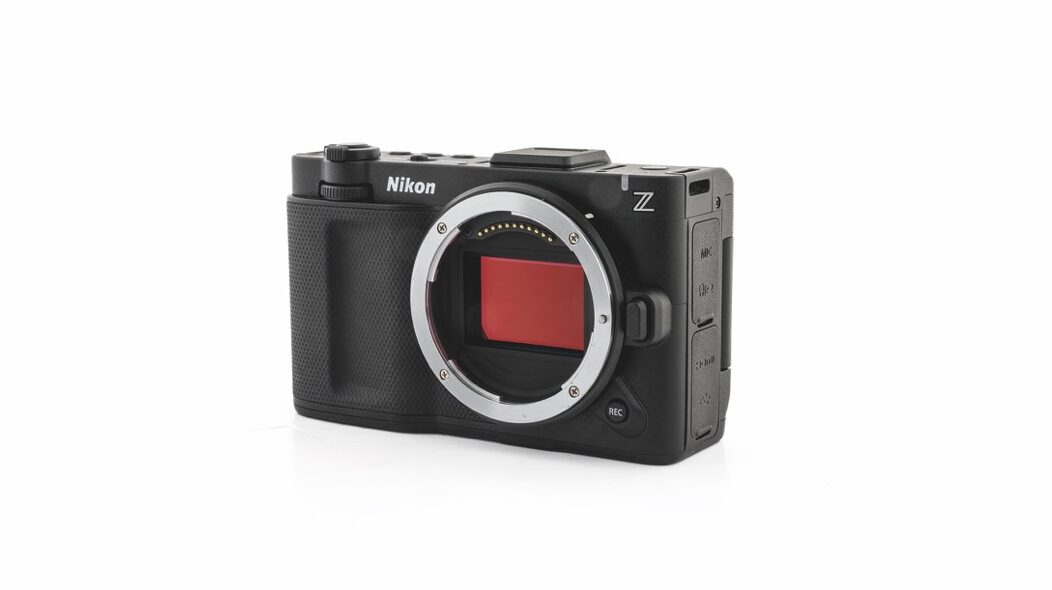
The inclusion of R3D NE means matching to larger Red systems is far easier. It also gives great colours as a stand-alone camera.
However, there is no choice in Red’s Raw codec as you’re stuck with 12-bit instead of any 14-bit options, and there is no choice of compression levels like in Red’s own cameras. You only have one Red Raw format or have to either switch to one of the two quality levels of Nikon Raw or go to ProRes, which are all 12-bit only.
Either way, this isn’t a significant complaint: any Raw shot internally is a boost. All three create incredible files with lots of headroom to grade to your heart’s content. The file sizes are big, of course, and Raw files do require an extra step in post, but the rewards are great. Dynamic range is simply staggering, the dual ISO controls noise well and the rolling shutter is excellent. There are no nasty skewed verticals to fear, unless you really provoke the baby Nikon.
If you want top-quality 4K, shoot in 6K and then drop it into a 4K timeline in post for the best results. That gives better quality than shooting in 4K. There are higher frame rate options when in 4K but, if you go to 4K/120p, the 1.5x crop sadly rears its head.
For edit-ready codecs, there is also ProRes 422 HQ that offers lots of dynamic range but has some noise reduction that can be a bit too aggressive at times – and the H.265 codec isn’t amazing.
The ZR camera offers Raw and works best when shooting it. You owe it to yourself to do just that and take the pain of the file sizes and extra workflow steps in your stride.
Shooting high-quality, large-size files usually causes heat issues but, although the ZR has no fan, there were no signs of overheating even when we left it running for two hours. That’s when the battery died, which is an excellent performance by itself. Plug in USB-C PD and it’ll keep going.
Great features such as this prove that Nikon has a well-developed understanding of what modern filmmakers and content creators really need from a camera. Despite some quirks, it’s hard to believe that this accomplished model is Nikon’s first cinema offering.
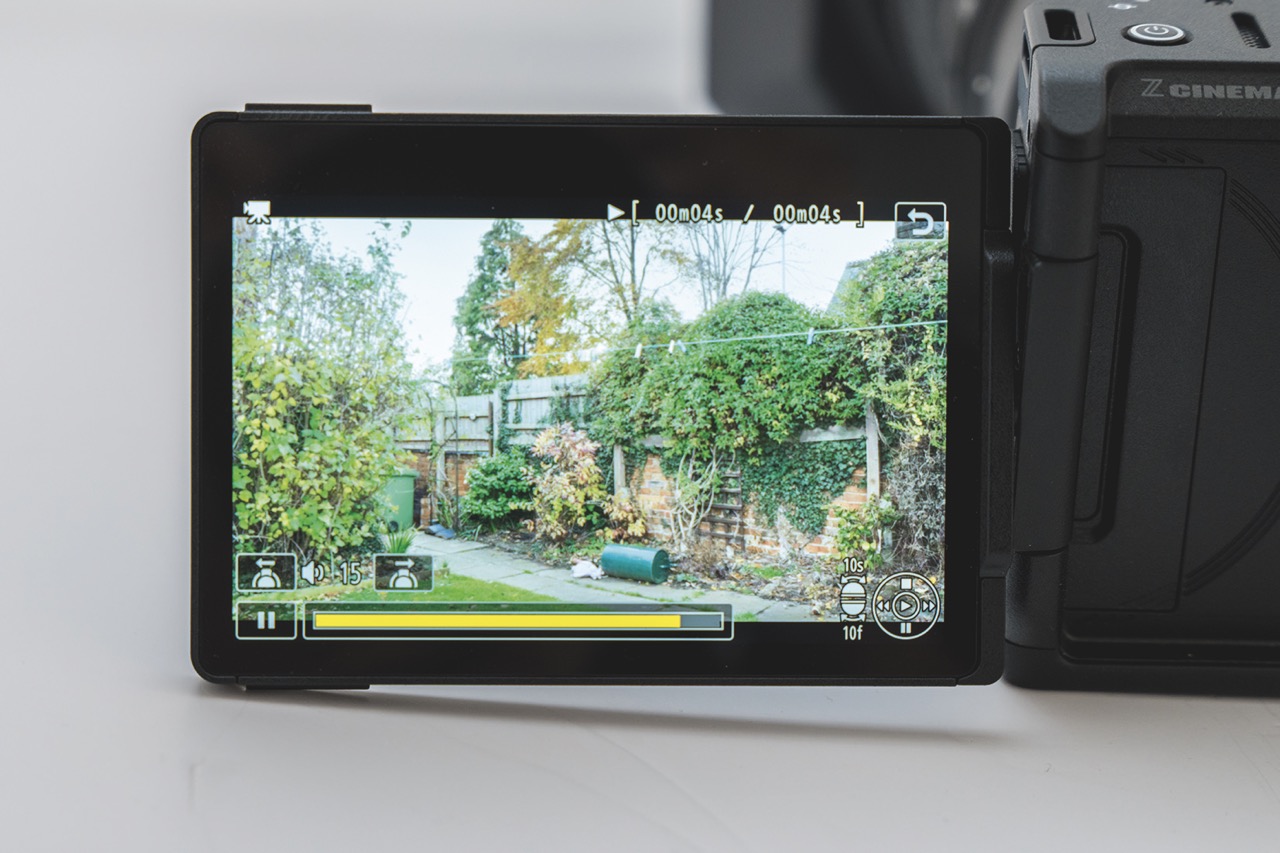
Power zoom is the cine star of Z mount range
One of the big advantages of the ZR is the Nikon Z mount, the largest of all current mounts with the shortest flange distance. This means that it accepts Nikon Z mount lenses, as well as legacy Nikon F mount and all third-party glass via adapters. With some adapters, it even retains autofocus despite the glass being from rival brands.
While Nikon’s Z mount range keeps on growing, the lenses are stills biased. There is currently only one dedicated Z mount cinema lens.
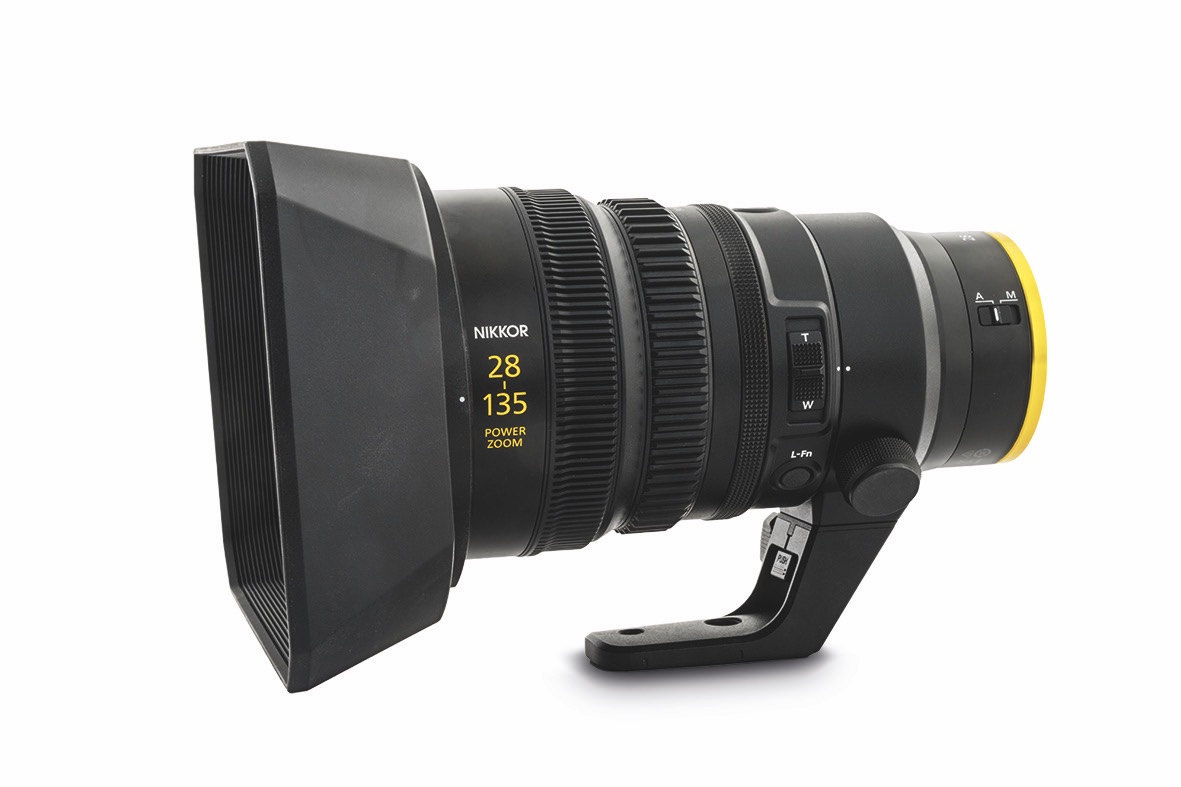
The Nikon 28-135mm f/4 PZ is built
to resolve 8K footage and is light enough to shoot handheld. This £2499/$2797 lens is ideal to use with the latest Z mount Red cameras, as well as full-frame Nikon Zs such as the Z 9 and the Z 8.
It’s not a true cinema lens with full, all-manual mechanical control but a hybrid, with autofocus and a servo zoom. It has a gimbal-friendly weight of just 1210g/2.67lb including the tripod collar.
Zoom control includes ease-in and ease-out, which negates the need for an external motorised zoom unit. There are 11 different levels of zoom speed that can be assigned to the lever on the lens. It also offers position record and recall, linear manual focusing and the ability to reverse the direction of the focus and zoom rings. The lens is sealed against both dust and moisture and can even be controlled remotely too.
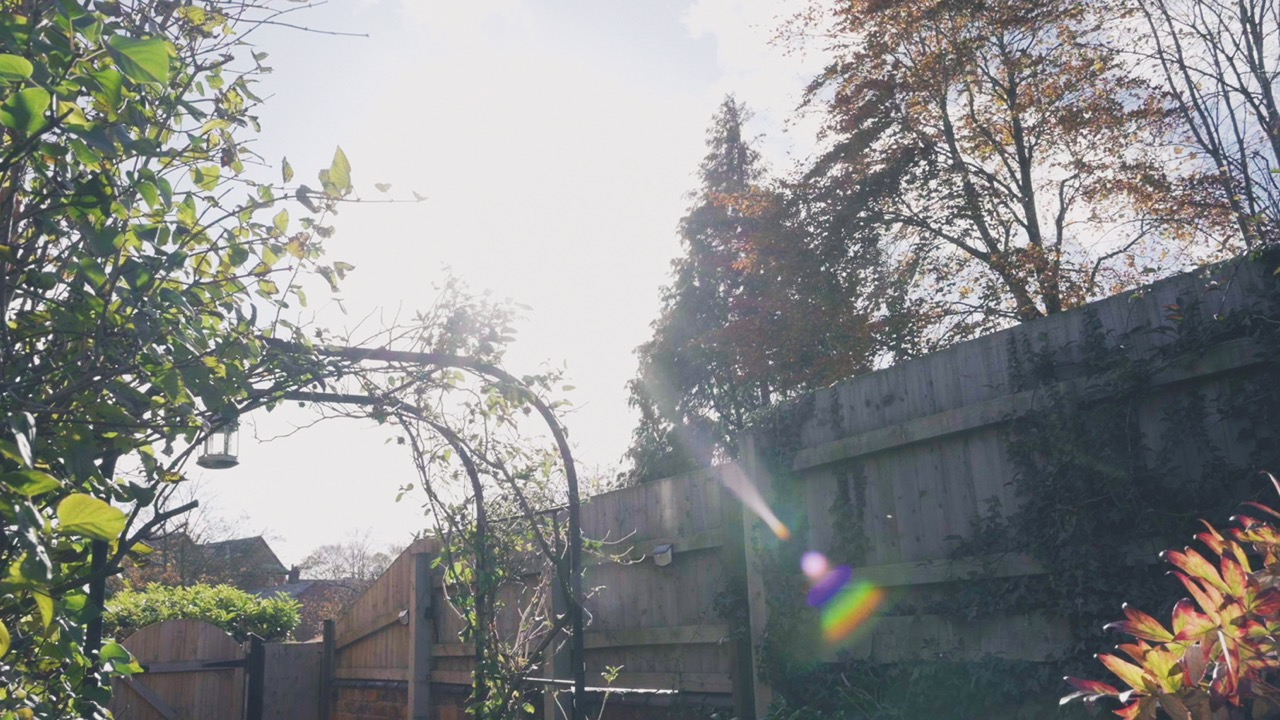
A special coating counters ghosting and flare, focus breathing is quite well suppressed and, with a minimum focus distance of 34cm/13.4in from 28mm to 50mm and 57cm/22.4in at 135mm, it is also good at getting in close. Event shooters and documentary makers will fall in love with this stunning, affordable, do-it-all lens.
The focus ring has a 0.8M gear pitch for standard follow focus units. And, when in autofocus mode, Nikon’s stepping motor operates very quickly and quietly.
At the front of the lens is a rectangular hood with a filter window for adjusting 95mm filters while the hood is attached. Although the hood is massive, it does an excellent job of fending off flare. Even when it is removed and you are shooting into the sun to provoke some flaring, it’s still well controlled and pleasing.
As a lens to match the ZR camera, the sheer size of the 28-135mm could be described as overkill. Optically speaking, however, it is a great performer and the price is respectable too.
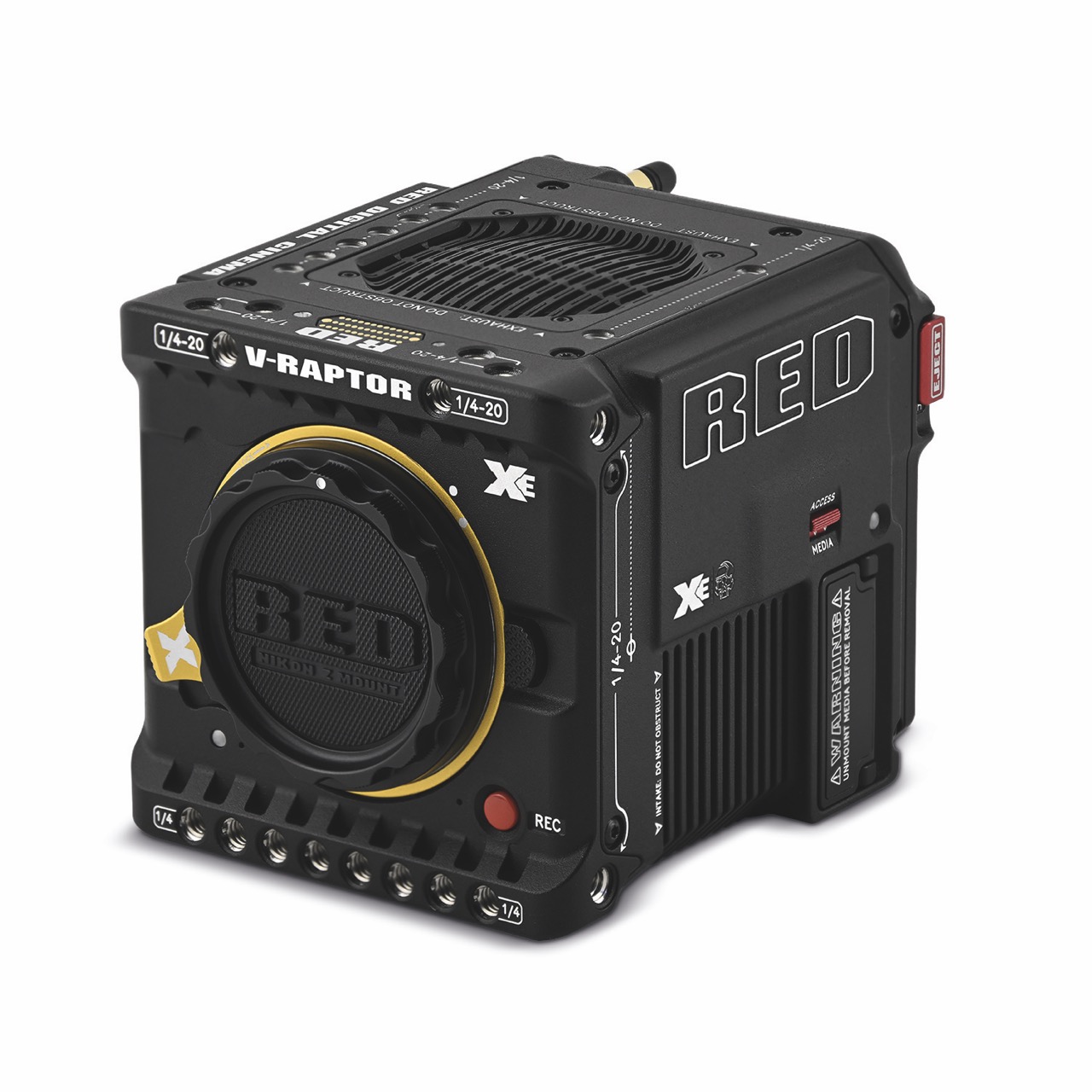
Red offers up a cut-price V-Raptor
For the well-heeled Nikon ZR owner, the ultimate accessory is surely a Red V-Raptor that keeps quality and colour consistently high. The new XE model brings the brand to a wider range of buyers at the more accessible price of £13,800/$14,995, making it the most affordable entry point into Red’s global shutter, large-sensor ecosystem.
The XE is a streamlined version of the flagship V-Raptor X with the same 8K VV global shutter sensor. This gives incredible dynamic range, low-light performance and Red’s iconic colour science with a choice of Raw codecs. Recording is 8K up to 60fps, 6K at 80fps, 4K at 120fps and 2K at 240fps. And, with the global shutter, there are never any skewed vertical lines.
The XE is available in Nikon Z mounts, although you can also buy a Canon RF-fit version and it remains compatible with existing V-Raptor accessories. Red offers a Cine Essentials Pack at £18,372/$19,995 including the XE body, a PL mount with electronic ND, Red Touch seven-inch LCD and an outrigger handle. Komodo owners can trade their existing cameras for credit towards an XE or V-Raptor X, or the XE can be upgraded to full V-Raptor X specs.
Specifications
- Price: £2199/$2197
- Sensor: 35.9×23.9mm full-frame CMOS, 24.5 megapixels
- Mount: Nikon Z
- Video formats: 12-bit ProRes Raw 6K to 30p, DCI 4K to 120p, 4K to 60p. 12-bit Redcode Raw 6K to 60p, DCI 4K to 120p, 4K to 120p. ProRes 422 HQ 4:2:2 10-bit 5.3K to 30p, 4K to 120p, HD to 240p. H.265 8/10-bit 5.3K to 30p, 4K to 60p, HD to 120p
- Video output: 4K via micro HDMI
- Gamma: Nikon N-Log, Red Wide Gamut RGB
- ISO: Dual base 800-6400, native 100-64,000
- Dynamic range: 15+ stops
- Shutter: Electronic rolling, 900secs to 1/16,000sec
- Autofocus: Phase detection AF
- Image stabilisation: Sensor shift
- Input/output: Micro HDMI, USB-C
- Live streaming: No
- Stills formats: NEF Raw, JPEG, HEIF
- Stills frame rate: To 20fps
- Screen: 4in articulating touchscreen, 3.07m dots, 1000 nits
- Viewfinder: No
- Media: 1x CFexpress Type B, 1x micro SD
- Audio: 32-bit float, 24-bit, five audio pickup patterns
- Audio input/output: 3.5mm headphone socket and mic in, intelligent hotshoe
- Dimensions (wxhxd): 133×80.5×48.7mm/5.2×3.2×1.9in
- Weight: 540g/1.19lb
The verdict
Nikon’s ZR is a bold, successful entrance into the cinema camera arena. For the asking price, the feature set is extraordinary with 6K/60p Raw, a full-frame sensor, Red-compatible workflow, 32-bit audio and a small, portable form with a huge screen.
There are some compromises, but these are expected when size and cost are kept down this much compared to premium cinema camera rivals.
If you’re shooting narrative, commercial, documentary or indie work where image quality and flexibility matter more than instant turnarounds or superfast frame rates, the ZR is a genuine revelation. For content creators who are aspiring to cinema-style results without the cinema budget, then Nikon has raised the bar. The first in the Z Cinema line delivers with confidence.
How it rates
Features: 9
Choice of internal Raw formats, 32-bit audio and great AF
Performance: 10
Stunning video quality and colours from Raw files, low noise
Handling: 8
The huge screen is impressive but it does cause compromises
Value for money: 10
Pro-quality Red-style colour science at prosumer prices
Overall rating: 9/10
It’s a stunning debut for Nikon and a great buy
- Pros: Huge screen, Red Raw files, price, audio
- Cons: Crop in 4K/120p, lack of mounting holes
This review was first published in the January/February 2026 issue of Pro Moviemaker